To bake your first cake from a mix, use the ingredients and pan listed on your box, preheat the oven, measure carefully, mix for the stated time, and bake until the package’s doneness test is satisfied. Let the cake cool before frosting. A simple sheet cake avoids the extra work of stacking layers.
Plan about 20 minutes of active work, plus the box’s baking time and enough cooling time. Allow roughly two hours overall, longer if your cake needs more cooling. This guide covers a conventional boxed cake mix whose directions include a rectangular sheet-cake pan, not angel-food cake or a specialty mix with different instructions.
The package in your kitchen is the authority for quantities and timing. Different flavors, brands and box sizes are not interchangeable. You do not need special mix upgrades or a new set of gadgets to get started.
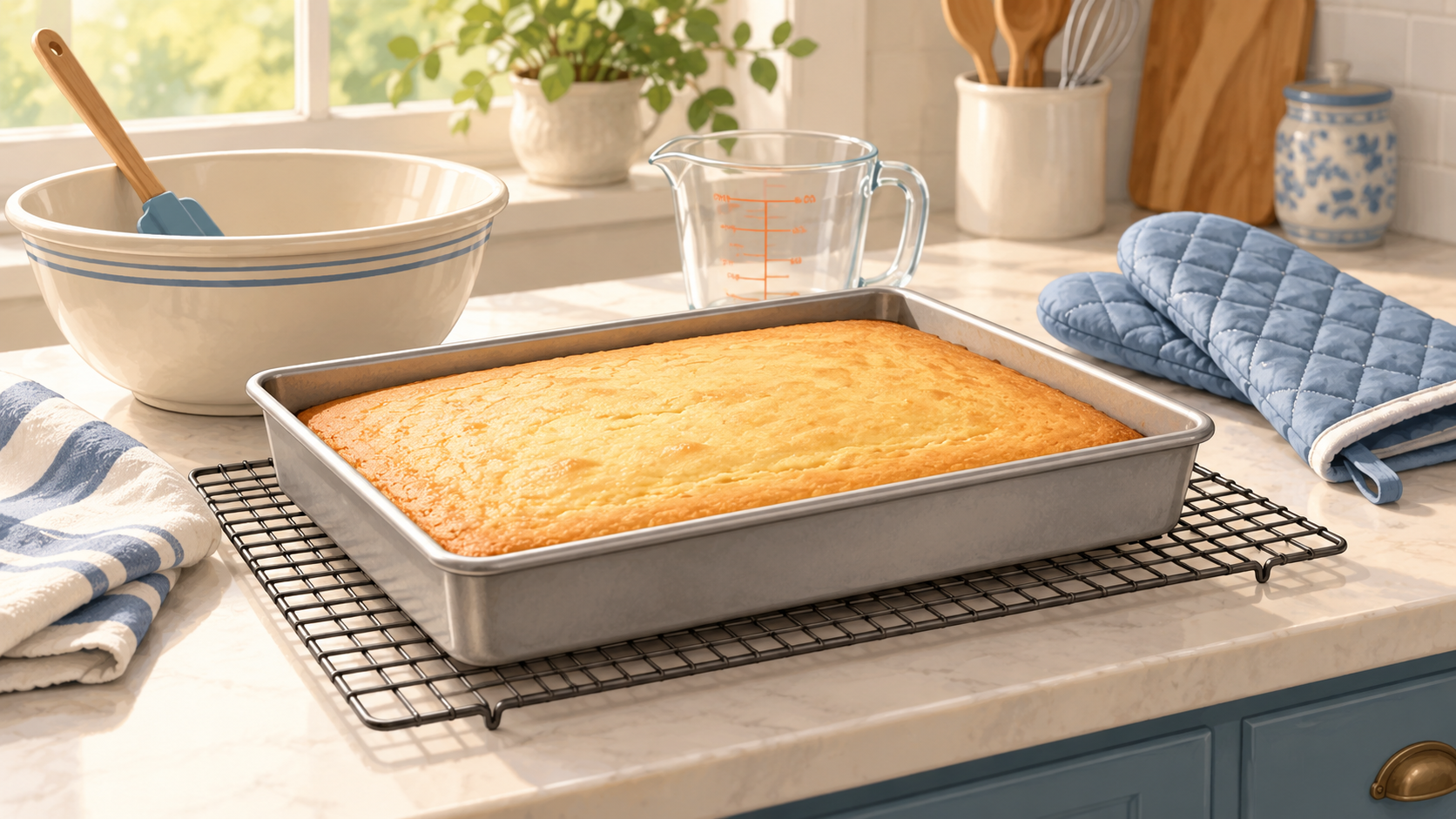
Hero image: AI-generated illustration of a simple sheet cake and baking equipment, not a photograph of a tested result.
What you need
- A conventional cake mix with sheet-pan directions, plus the exact ingredients listed on its box
- A rectangular oven-safe pan in the size and material specified on the box; pan preparation supplies as directed
- Mixing bowl, liquid measuring cup, measuring spoons, and mixer or spoon allowed by the instructions
- Oven, timer, dry oven mitts, toothpick or cake tester, and a cooling rack
- Optional frosting suitable for your cake, plus soap and clean washing-up supplies
Steps
-
Read the box and prepare the oven and pan
Before opening ingredients, read the full directions, including the pan chart and any high-altitude note. Choose a listed rectangular pan; a smaller pan can overflow and a larger one changes the cake’s depth. Set the oven to the temperature specified for your pan material and let it fully preheat. Use the center rack unless the package says otherwise.
Grease, flour or line the pan only as the mix directs. Some instructions distinguish greasing the bottom from greasing the sides. Wash your hands and clear a clean work area before handling ingredients. See Betty Crocker’s cake preparation guide for pan and measuring basics.
-
Measure and mix without tasting the batter
Put the required mix and additions into a bowl in the order your package specifies. Measure liquids on a level counter, checking the mark at eye level. Use the stated mixer speed or hand-mixing method and time; longer mixing is not automatically better.
For your first attempt, keep to the package rather than combining online substitutions. The manufacturer’s current yellow-mix directions illustrate why the exact box matters: its amounts and pan chart apply to that product, not every cake mix.
Do not lick the spoon or taste raw batter. Flour and eggs can carry harmful bacteria. Keep them away from ready-to-eat food, and wash your hands, bowl, utensils and work surfaces after handling them. The FDA’s flour-safety guidance also applies to batter made without eggs.
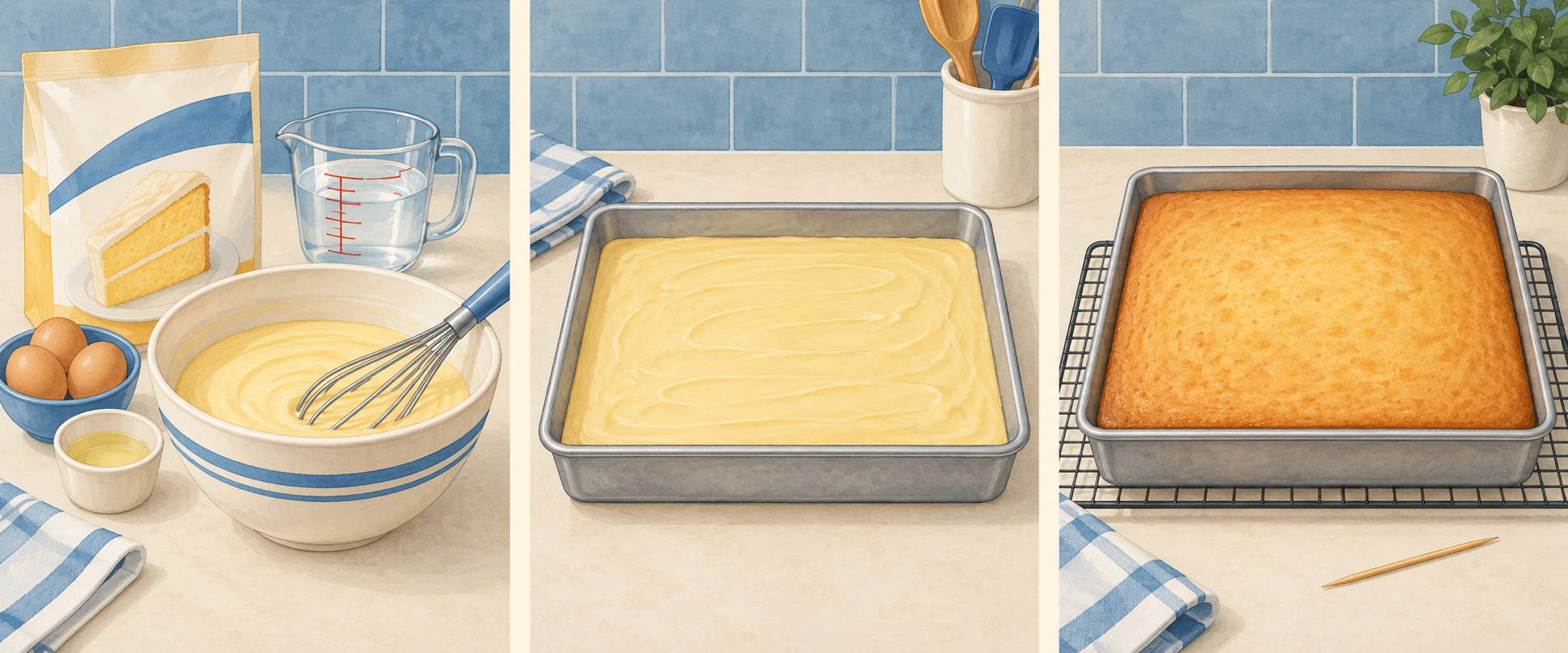
AI-generated illustration: mix using the package measurements, spread the batter evenly, then cool the baked cake. The drawing does not specify ingredient quantities or demonstrate a tested result.
-
Spread evenly, bake and check the center
Transfer the batter to the prepared pan and spread it to an even depth. Put it in the fully preheated oven, leaving space around the pan. Set a timer for the beginning of the box’s baking-time range for that pan.
Use dry oven mitts when handling the hot pan. Follow the package’s doneness check, usually a toothpick inserted near the center. Wet batter on the tester means more baking is needed; return the cake to the oven and recheck after a short interval. Do not decide from a brown edge alone. See Betty Crocker’s explanation of the center test.
-
Cool, finish and learn from the result
Place the hot pan on a stable cooling rack. Follow the box’s cooling directions; a sheet cake can often be served in its pan, so there is no need to improvise a risky flip. Wait until fully cool before spreading frosting. Follow the frosting’s storage instructions, especially if it requires refrigeration.
If something went wrong
- Wet middle: keep baking until the stated doneness test is met. Check the selected pan and oven temperature against the box.
- Dry or flat cake: next time recheck pan size, ingredient measurements and the bake-time range. Do not assume extra liquid will fix the underlying issue.
- Repeated uneven results: the manufacturer’s cake-mix FAQ recommends checking pan size, mixing time and oven accuracy; an oven thermometer can help diagnose temperature differences.
Do I need an electric mixer?
Only if your mix requires one. Some packages include a hand-mixing method; use its stated method and time.
Can I replace water, oil or eggs?
Use the package instructions for this first cake. If you need a dietary substitution, choose manufacturer-tested instructions for the exact mix instead of stacking several untested changes.
Can I frost a warm cake?
Wait until it is fully cool. This makes a simple finish easier and avoids warming the frosting unnecessarily.
Another beginner oven project
For a different use of basic oven skills, try our guide to roasting pumpkin seeds.
Why this topic now
Google Trends, United States, Web Search, past seven days, checked October 20, 2026 at 14:00 UTC, listed “how to bake a cake” at +70% among rising related queries for “how to.” This describes related-query growth over the comparison period, not a 70% rise in the parent term, search volume, or a claim that a spike is still accelerating. View the rolling Trends exploration.
This is a research-based beginner guide, not a report of hands-on recipe testing. A video and shopping links are omitted rather than adding unverified or unnecessary recommendations.