
Hero: AI-generated generic illustration of label reading, not an actual product photograph.
To check a packaged food for wheat, read the entire ingredient list, any Contains statement and any separate cross-contact advisory. Do not treat a missing warning or a gluten-free badge as proof that a food is suitable for a wheat allergy.
Grocery packaging can feel like a wall of tiny print when you just want to finish the shopping. This short routine gives you a clear order for checking it. Allow about 10 active minutes to practise with two packages; contacting a manufacturer takes additional time. You do not need to buy anything.
Scope: This is a research-based label-reading guide, not a diagnosis, diet recommendation or food-safety guarantee. It focuses on ordinary FDA-regulated packaged foods sold in the United States. Other rules can apply to USDA-regulated meat, poultry and certain egg products, many alcoholic drinks, and unpackaged foods. For an allergy or celiac disease, follow your clinician’s individual avoidance plan rather than changing it based on this article.
Why this topic now?
Checked October 28, 2026: Pinterest Trends, United States, reported Wheat-Free Diet Pin saves up 200% versus the previous month. Its displayed historical window was August 2–October 25, 2026, and the detail chart rose into the latest endpoint. This is growth in Pinterest saves—not measured search growth, sales, a health benefit or proof that everyone should avoid wheat.
What you need
- One or two unopened packaged foods with readable ingredient labels
- Good lighting; optional reading glasses or a magnifier you already own
Steps
-
Start with the actual package
Turn the package until you can see the full ingredient panel. Check the exact flavour and size rather than assuming that another version has the same recipe. If the type is hard to read, improve the lighting or use magnification. An old shopping-page photo is not a substitute for the label in your hand.
-
Read all ingredients, then any Contains statement
Look for wheat in the ingredient name, in parentheses after an ingredient, or in a separate Contains statement beside the list. Wheat is one of the nine major US food allergens. If you are avoiding wheat and it is declared, set that product aside.
A separate Contains statement is not present on every label. Never stop checking merely because you cannot find that box or line. Read the whole ingredient list, including ingredients in parentheses.
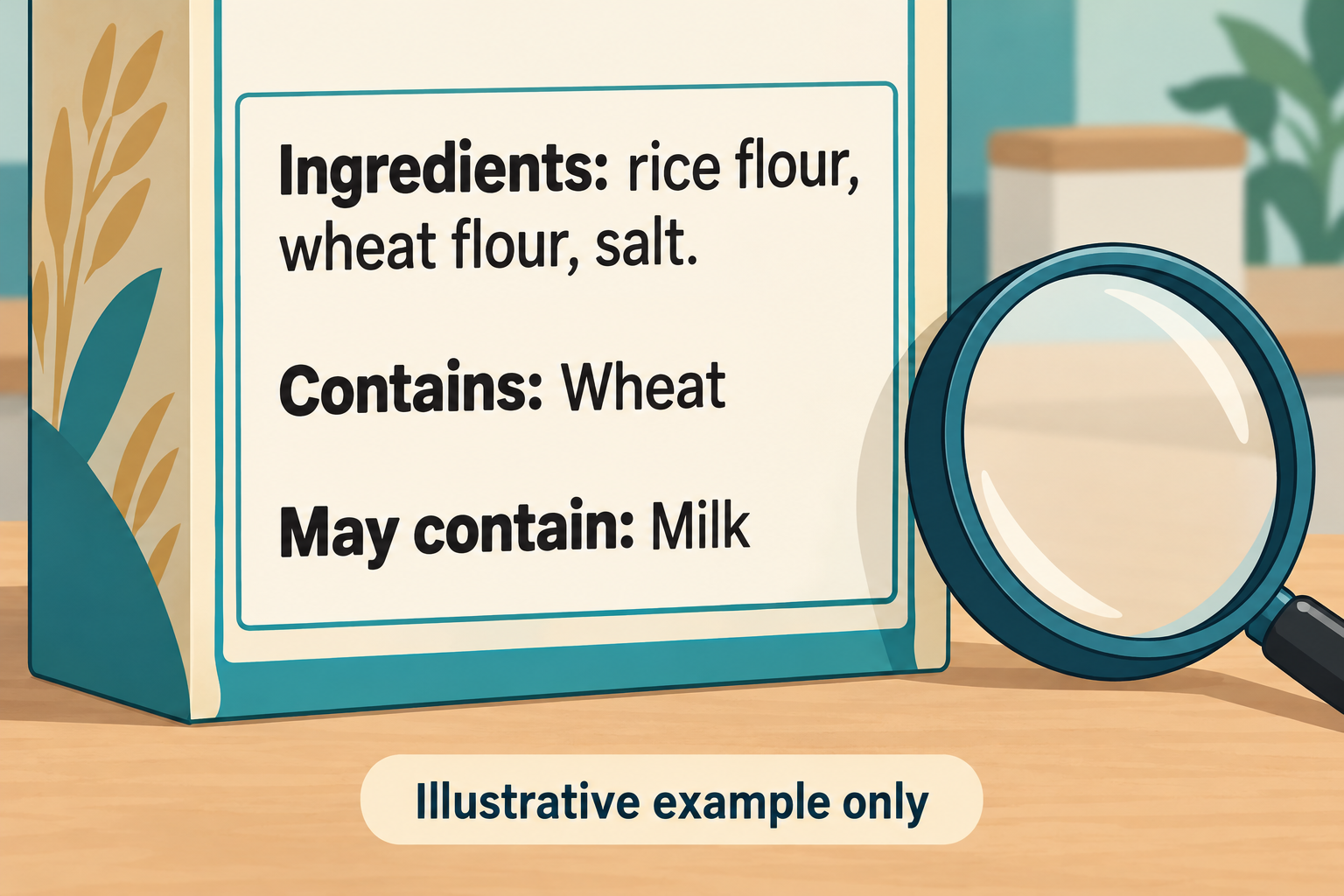
AI-generated teaching illustration, not an actual product label. Wheat is an ingredient in this fictional example; the milk advisory has a different meaning.
-
Separate cross-contact warnings from ingredients
Check for a separate May contain or shared-equipment/facility advisory. These concern possible unintended allergen presence, not simply the recipe. Such advisory labels are voluntary: no advisory does not guarantee no cross-contact. Do not use their absence to overrule an allergy plan. If the meaning or suitability is uncertain, leave the food unopened and ask the manufacturer.
In the illustration above, wheat appears as an ingredient while milk appears in an advisory. Neither line cancels out the other.
-
Do not swap wheat-free and gluten-free
Keep the two checks separate. Gluten occurs in wheat, barley and rye, so avoiding wheat alone does not establish that a food is gluten-free. Conversely, FDA rules allow some ingredients derived from wheat that have been processed to remove gluten in a food meeting gluten-free requirements. A gluten-free claim is therefore not an automatic wheat-allergy clearance.
If you see a gluten-free claim alongside a wheat declaration, do not try to resolve your personal suitability from the badge alone. Follow your clinician’s plan and obtain clarification before choosing it. See FDA’s gluten-free labeling questions and answers.
-
Resolve questions and repeat the check next time
If a label is missing, damaged or unclear, do not guess. Keep the product unopened while you seek an answer from the manufacturer or distributor named on the package. Have its exact name, flavour, size and lot information ready. A useful question is: “Does this exact product contain wheat, and what information can you provide about wheat cross-contact?” An unanswered question is not an all-clear.
Check again with each purchase: recipes can change. When sharing food, keep the original package available instead of replacing its information with a homemade “safe” label. Our small packaged-dessert tasting guide explains a practical way to retain labels at a gathering.
Troubleshooting and quick questions
There is no Contains line. What now? Return to the full ingredients. A separate statement is not universal.
Can I use a shopping app instead? It can help you prepare, but check the current physical package before choosing the food. If details disagree, seek clarification rather than picking the answer you prefer.
Does no wheat listed prove gluten-free? No. Wheat and gluten are different checks; barley and rye matter for gluten, too.
Sources and review notes
Researched October 28, 2026; no hands-on product testing or medical assessment was performed. Primary references: FDA: Have Food Allergies? Read the Label (ingredient checks, advisory statements and recipe changes); FDA: Food Allergies (major allergens, scope and cross-contact); and the FDA gluten-free Q&A linked in Step 4. Pinterest supplies the topic-interest signal only, not the food-safety guidance.