Clean a reusable makeup sponge after each use with a cleanser suited to its material, rinse thoroughly, then let it air-dry completely. Gentle squeezing matters more than hard scrubbing. Allow about five minutes of active work, plus drying time that varies with the sponge and room.
This guide is for ordinary washable foam makeup sponges, not disposable applicators or powered devices. Check your sponge maker’s care directions first. You do not need a special cleaning gadget.
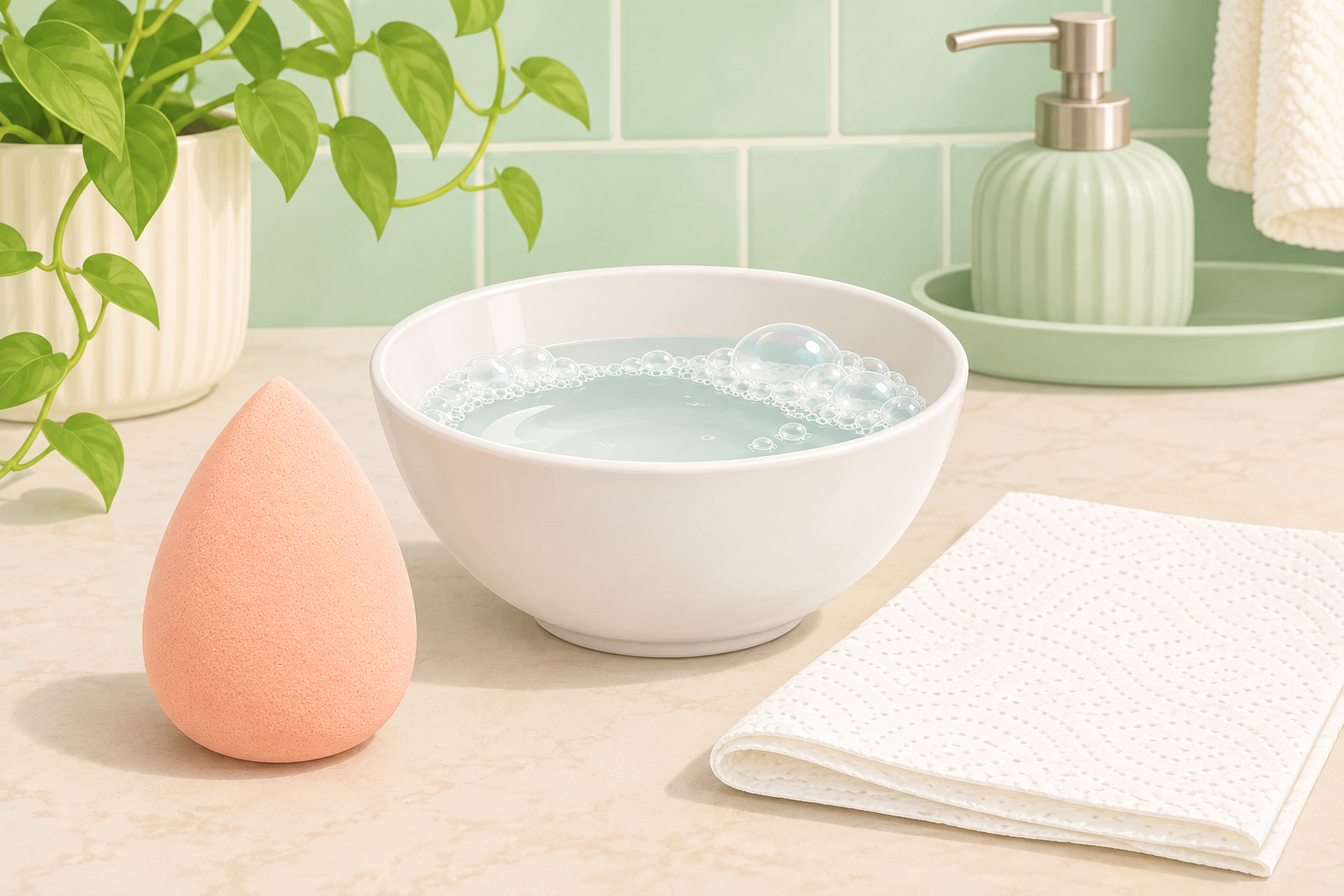
Hero image: AI-generated generic illustration of sponge-cleaning supplies, not an actual product photograph.
What you need
- Reusable washable foam makeup sponge and its care instructions
- Clean bowl and warm running water
- Liquid cleanser or soap permitted by your sponge manufacturer
- Clean paper towel and an open, well-ventilated drying space
Steps
-
Check the sponge and choose a suitable cleanser
Wash your hands and inspect the foam. If you see mold, stop using the sponge rather than trying to wash it away. Check the maker’s directions for the cleanser and replacement schedule. Beautyblender recommends its own cleanser for its foam; that recommendation is not a requirement for every brand.
-
Prepare warm soapy water
Fill a clean bowl with warm water and add a few drops of suitable liquid cleanser or soap. Put the sponge into the water so it becomes thoroughly wet. Follow the cleanser label if it specifies a different amount or method.
-
Massage gently, without twisting
Massage the soapy water into the sponge for about 15 seconds, as the American Academy of Dermatology advises. Use light compressions rather than digging in with your nails. Beautyblender cautions that delicate squeezing helps avoid snags and tears.
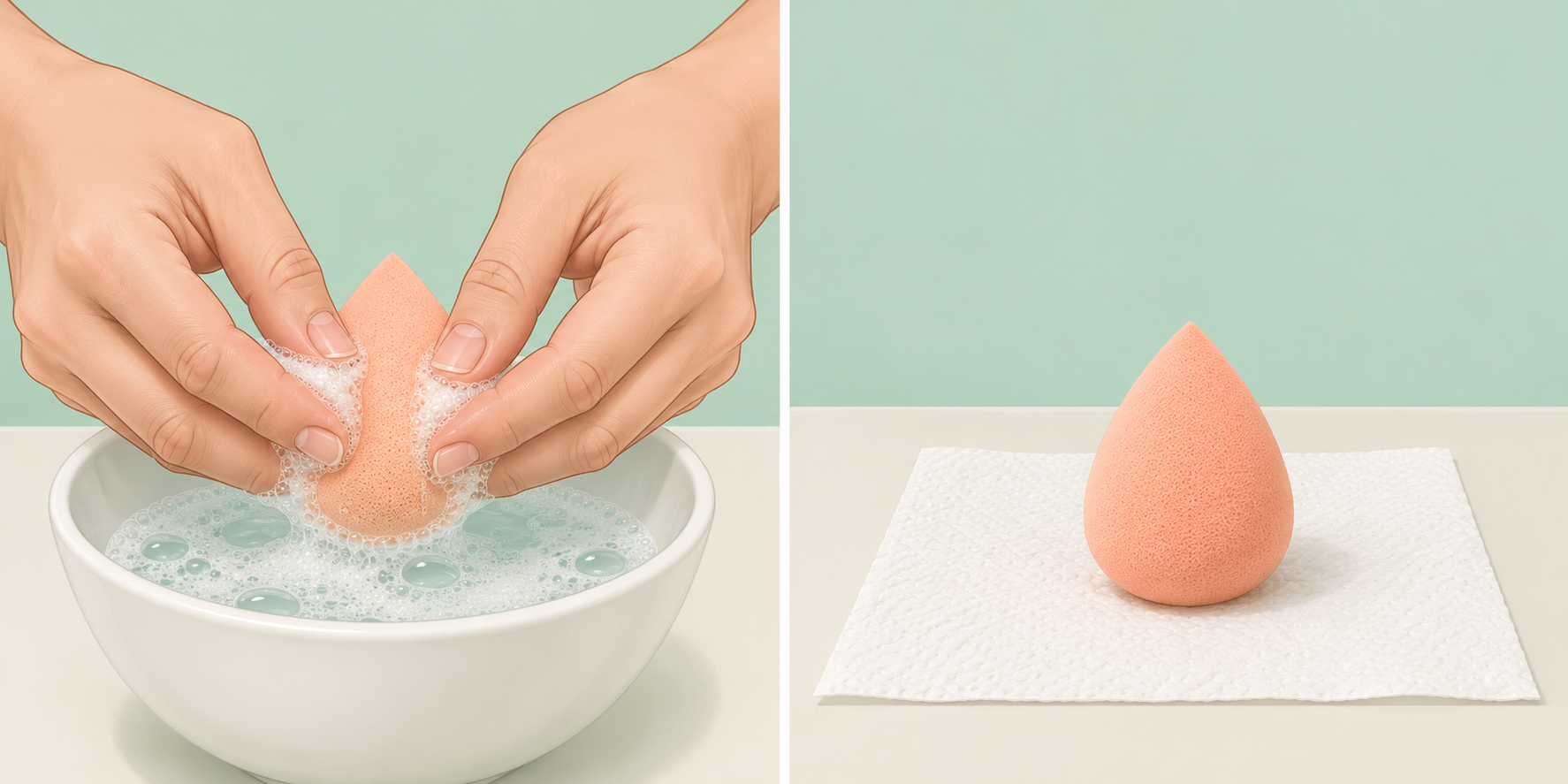
AI-generated illustration: gentle compression at left; open-air drying after rinsing at right. Not an actual product photograph.
-
Rinse until the water runs clear
Lift the sponge out and rinse under warm running water. Gently squeeze and release it to move clean water through the foam. Continue until the water runs clear and excess cleanser is removed. Do not microwave the sponge or pour vinegar on it: Beautyblender specifically advises against both shortcuts.
-
Squeeze out water and air-dry completely
Press out excess water gently. Set the sponge on a clean paper towel in a clean, well-ventilated area. Leave it open to the air until completely dry, rather than packing it damp into a makeup bag. The five-minute estimate covers washing, not drying.
Troubleshooting
- Still soapy? Continue rinsing and gently compressing the foam rather than adding more cleanser.
- Color comes out during washing? Beautyblender says its water-soluble dyes can shed during the first few washes. Do not assume that explanation applies to an unknown sponge.
- Mold is visible? Stop using it. Cleaning is not a reason to keep a moldy sponge.
Common questions
How often should I wash it?
The American Academy of Dermatology and Beautyblender recommend cleaning makeup sponges after each use. Brushes have a different schedule: see our makeup-brush cleaning guide.
When should I replace it?
Beautyblender recommends replacing its sponge every three months. For other brands, follow their instructions rather than treating that interval as universal.
Does this sterilize the sponge?
No sterilization claim is made here. This is a routine washing method, not a tested disinfection procedure.
Why this topic was selected
Checked November 3, 2026: Pinterest Trends, United States, reported Makeup tools outbound clicks up 75% month over month. The displayed chart spans September 4–November 27, 2026 with a rising solid historical segment followed by a dotted forecast. The public preview does not label the exact crossover date. The positive monthly metric is a category-level shopping-engagement signal, not sponge-specific search growth, sales or proof of overall demand. Future chart values are predictions, not observed growth. Detailed comparisons require login; this article does not claim a daily rise or a verified peak date.
Sources and scope
Research-based instructions; no hands-on testing is claimed. Sources checked November 3, 2026: