For routine fingerprints on stainless steel appliance exteriors, start with your model’s care instructions, a soft damp cloth and gentle strokes along the grain. If the finish permits mild soap, rinse away the residue with a separate damp cloth and dry promptly. The right finish-specific method matters more than scrubbing harder.
It is frustrating to wipe a fridge door and see new streaks as soon as the light changes. This beginner guide keeps the job small: one cool appliance exterior, about 15 minutes of active work. That is a planning estimate, not a tested timing. This is a research-based guide; we have not hands-on tested these methods or the optional cloths.
Scope: exterior metal panels only. Fingerprint-resistant and black stainless finishes may have a coating. Follow the manual for screens, controls, handles and other materials. This is not a disinfecting, scratch-removal or rust-treatment procedure.
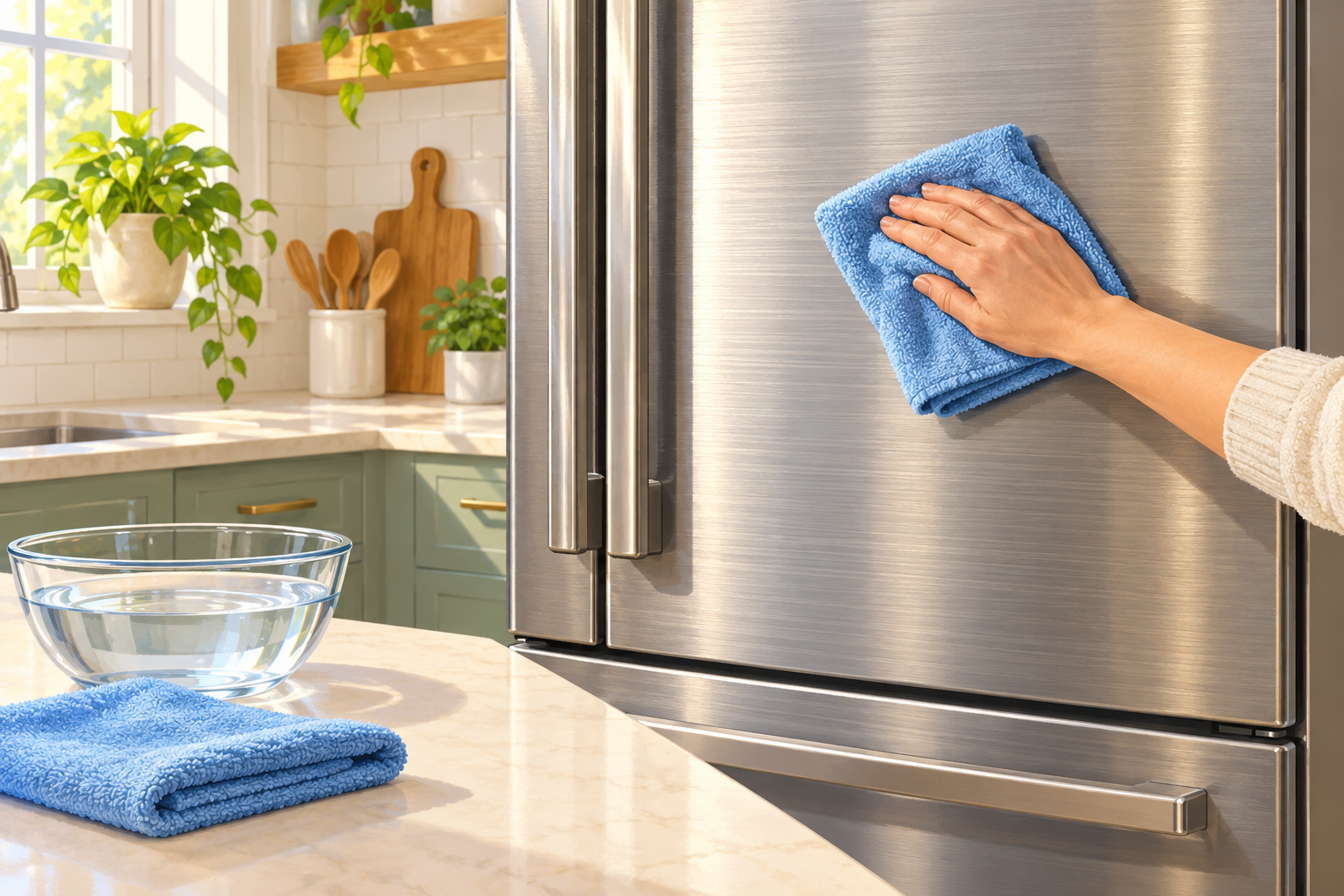
Hero image: AI-generated generic illustration, not an actual product photograph.
Optional supplies
Use suitable clean cloths you already own. If you need extras, the verified option below is Amazon Basics microfiber cloths, 16 × 12 inches, blue/white/yellow, 24-pack (ASIN B009FUF6DM). It is a larger pack than this job needs; a clean cloth and finish compatibility still matter.
As an Amazon Associate I earn from qualifying purchases.
View the optional Amazon Basics 24-pack microfiber cloths on Amazon
What you need
- Your appliance model’s care manual, especially the finish-specific cleaning instructions
- Three clean, soft microfiber cloths: one to wash, one to rinse, one to dry
- A bowl of warm water and mild non-abrasive dish soap only if your appliance manual permits it
Steps
-
Identify the finish before choosing a cleaner
Find the model number and read the care section of its manual. Traditional stainless steel, fingerprint-resistant coatings and black stainless are not interchangeable. If you cannot identify the finish, postpone cleaners and check with the manufacturer.
Work on a cool exterior. Follow the manual’s safety instructions; keep liquid out of vents, seams and electrical controls. Leave bleach, steel wool, scouring powders and abrasive pads out of this job.
-
Prepare a clean cloth and wipe with the grain
Check the cloth for grit. Wash new cloths according to their care label before first use. Dampen a soft cloth with warm water, then wring it out so it is not dripping. Apply liquid to the cloth rather than spraying the appliance.
Look closely for the faint brushed lines in the metal. On a small inconspicuous area first, wipe gently in that direction. For a greasy mark, use mild soap only where the model’s instructions allow it. There is no universal soap-to-water recipe: follow the approved cleaner’s directions and avoid leaving a heavy soapy film.
-
Remove residue, then dry straight away
Use a second cloth dampened with clean water to remove any soap left on the panel. Follow with a separate soft dry cloth, wiping along the grain. Work a section at a time so droplets do not sit on the surface.
Keep the washing and drying cloths separate. If a cloth begins spreading marks rather than lifting them, switch to a clean section or replace it. A stainless-steel polish is optional only when approved for your exact finish; it is not a substitute for removing dirt first.
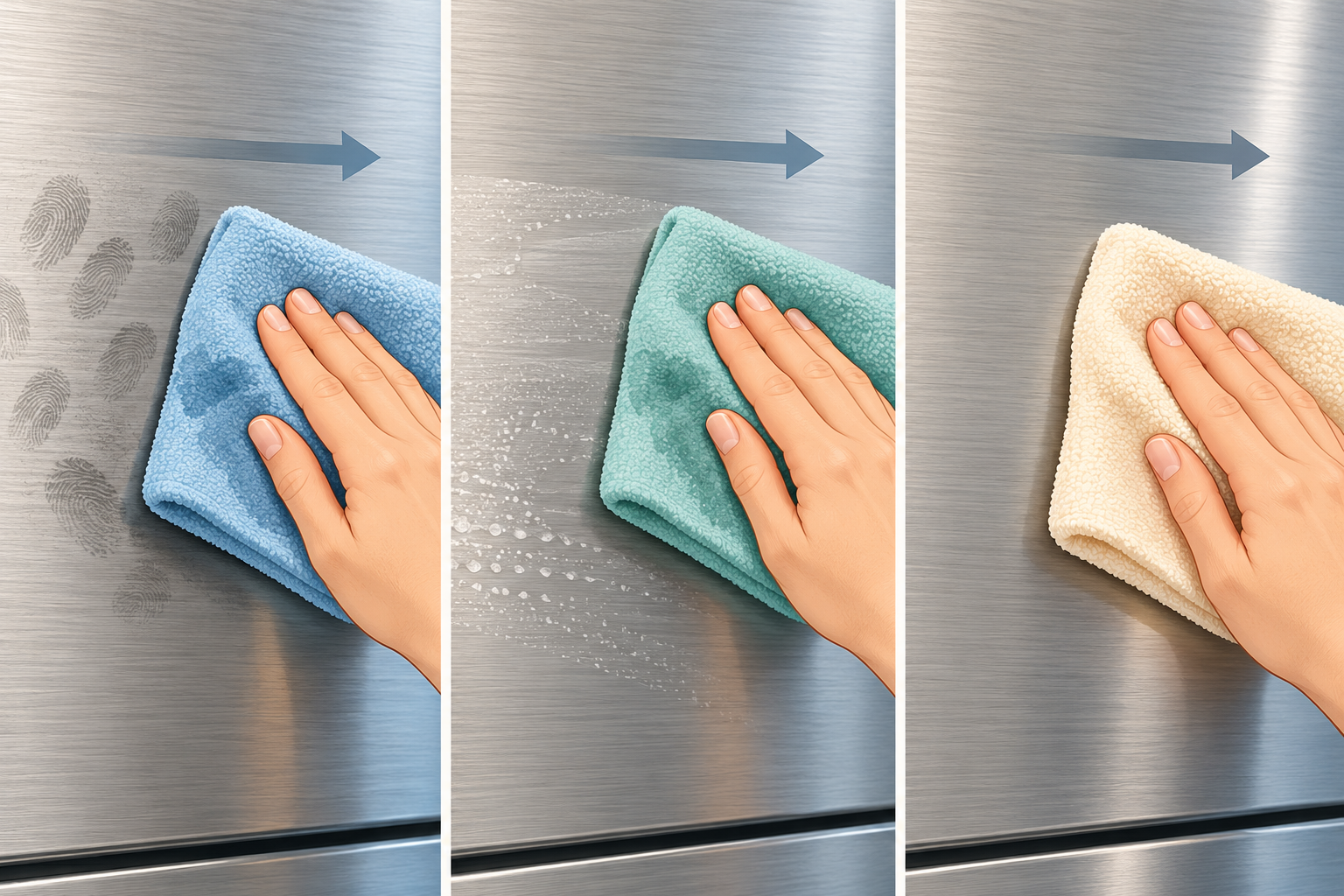
AI-generated generic illustration, not an actual product photograph. Left to right: wash, remove residue, dry. The arrows illustrate following the grain; your appliance may have a different grain direction.
-
Check the result without escalating to abrasives
Look across the panel from another angle. If streaks remain, try one more gentle clean-water pass and dry with a fresh cloth. Stop if the surface becomes cloudy, discolored or visibly scratched; consult the manufacturer rather than trying a stronger household chemical.
Common questions
Why are there still streaks? Remaining cleaner, a dirty cloth or water left to dry can contribute. Check those simple causes before changing products.
Can I use vinegar or baking soda? Do not treat them as universal remedies. Finish-specific instructions take priority, especially on coated or fingerprint-resistant panels.
Do I need stainless-steel polish? Only if your manual recommends it for that finish. Some coatings need only the manufacturer’s simple wash-and-dry routine.
Will this remove scratches or rust? No. Those need model-specific advice, not harder scrubbing. Keep the task to ordinary exterior soil.
Sources and why we chose this topic
Checked October 18, 2026: Google Trends US, “how to,” Past year, Web Search, All Categories showed the related query “how to clean stainless steel” at +250% change. This is related-query growth within an annual window, not a claim of a new daily spike or an Amazon sales ranking.
- Whirlpool: grain direction and stainless-steel appliance care
- Whirlpool: fingerprint-resistant finish precautions
- GE Appliances: exterior cleaning guidance
- Samsung: apply cleaner to a cloth and follow the grain
These general manufacturer references do not replace your model’s manual. The tutorial deliberately avoids a one-cleaner-fits-all claim.