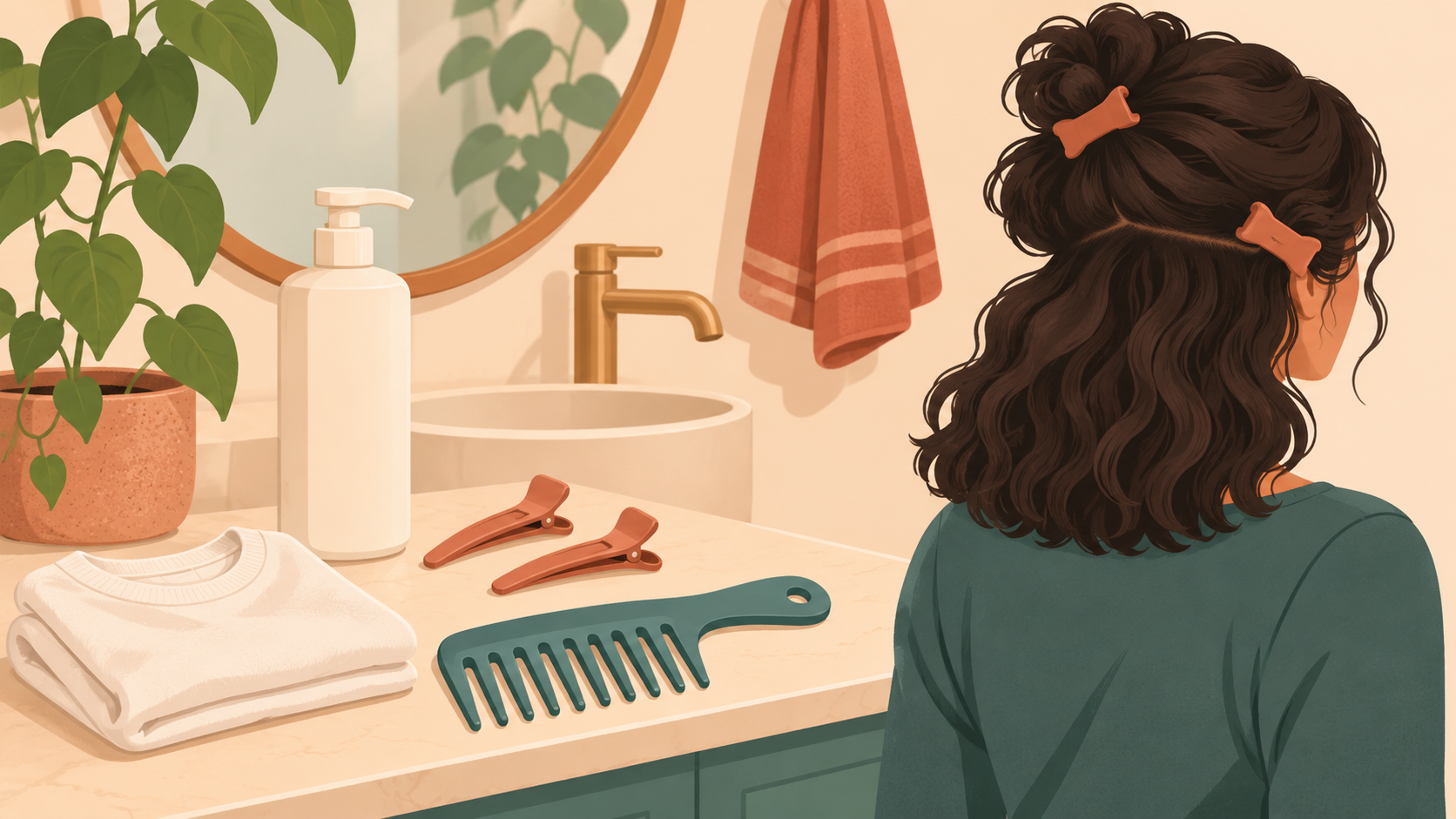
Detangle thick hair in small sections, loosening the ends first and moving the starting point of each downward comb stroke higher only after the lower lengths are clear. Match the timing to your texture: thick curls benefit from conditioner-assisted wet detangling; straight hair should dry a little before combing.
Allow about 15 minutes of active work for ordinary tangles, plus washing and drying if needed. This beginner routine is not for tightly matted hair, extensions or loc maintenance. Stop if it hurts rather than trying to finish on a timer.
Hero image: AI-generated illustration of a detangling setup, not a photograph or evidence of testing.
What you need
- Wide-tooth comb
- Conditioner or leave-in conditioner suitable for your hair type
- Sectioning clips
- Soft towel or clean cotton T-shirt
Steps
-
Choose the right starting condition
After washing, use conditioner suited to your hair type. For thick curly hair, detangle before rinsing it out. For straight hair, let it dry a bit before using the comb. Between washes, the American Academy of Dermatology advises thoroughly wetting curly hair and using a leave-in conditioner; follow its label.
-
Divide into manageable sections
Use clips to separate the hair into four or more loose sections. Work on one at a time. With your fingers, gently tease apart loose knots. Hold the section above the area you are working on to reduce pulling at the roots; do not grip or tug the scalp.
-
Clear the ends before moving higher
Use a wide-tooth comb for short, gentle downward strokes through the lowest tangled length. Once that part is clear, begin a little higher and comb toward the ends again. Never drag the comb from the roots through a resistant knot. Repeat section by section.
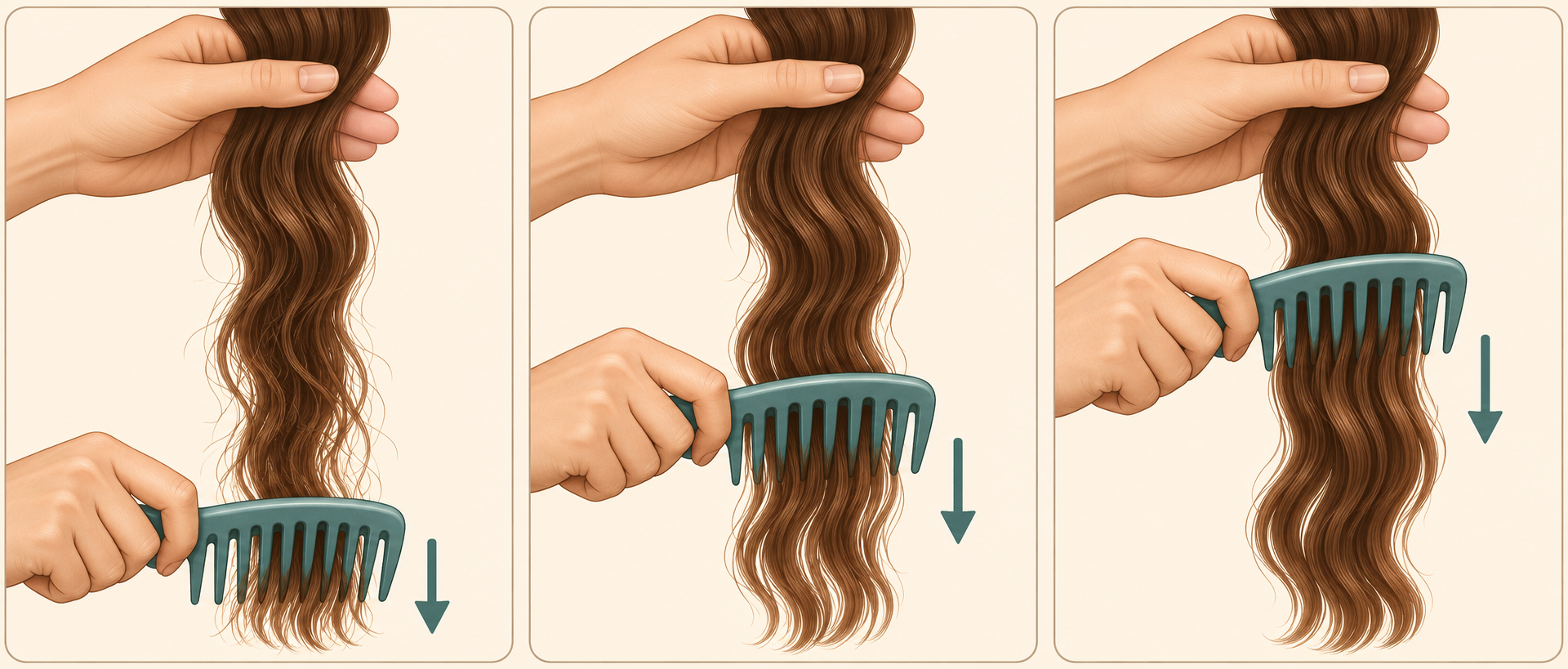
AI-generated illustration: read left to right. Each stroke goes downward; only the starting point moves higher after the lower hair is clear.
-
Pause at a stubborn knot
If the comb catches, stop and return to your fingers and a smaller section. Use conditioner according to its directions rather than forcing repeated passes. A dense mat that will not loosen gently needs a professional stylist, not harder pulling or an improvised cut.
-
Finish gently and check the result
Rinse out rinse-off conditioner as directed. Gently wrap wet hair in a soft towel or cotton T-shirt to absorb water without rubbing. The goal is a section the comb passes through comfortably, not a promised breakage-free result.
Troubleshooting and FAQs
Should I brush thick curls dry? AAD recommends avoiding dry brushing curly hair because it can increase frizz and breakage. Use the texture-appropriate preparation above.
What if it still hurts? Stop. Seek a stylist for persistent knots and a dermatologist for scalp pain, irritation or unusual hair loss.
Do I need special purchases? A suitable comb, conditioner and clips you already own are enough. This guide does not recommend a particular brand.
Watch the supporting demonstration
American Academy of Dermatology: Healthy hair care tips from dermatologists. Its 1:23–1:53 section explains wide-tooth combing, texture-specific timing, ends-first detangling and gentle drying. It is broader hair-care guidance, not this exact five-step routine.
Sources and trend context
Guidance checked November 9, 2026: AAD healthy hair tips; AAD curly hair care; Hair.com by L’Oréal detangling guidance (sectioning, supporting the hair and seeking professional help for mats).
Pinterest Trends, United States, checked November 9, showed “Medium Length Hairstyles for Thick Hair” at +5,000% month over month in Pin saves, with a displayed August 14–November 6, 2026 chart. Saves rose sharply and remained elevated at the end. This hairstyle-planning signal inspired a practical preparation guide; it does not measure searches for detangling, sales or overall demand.