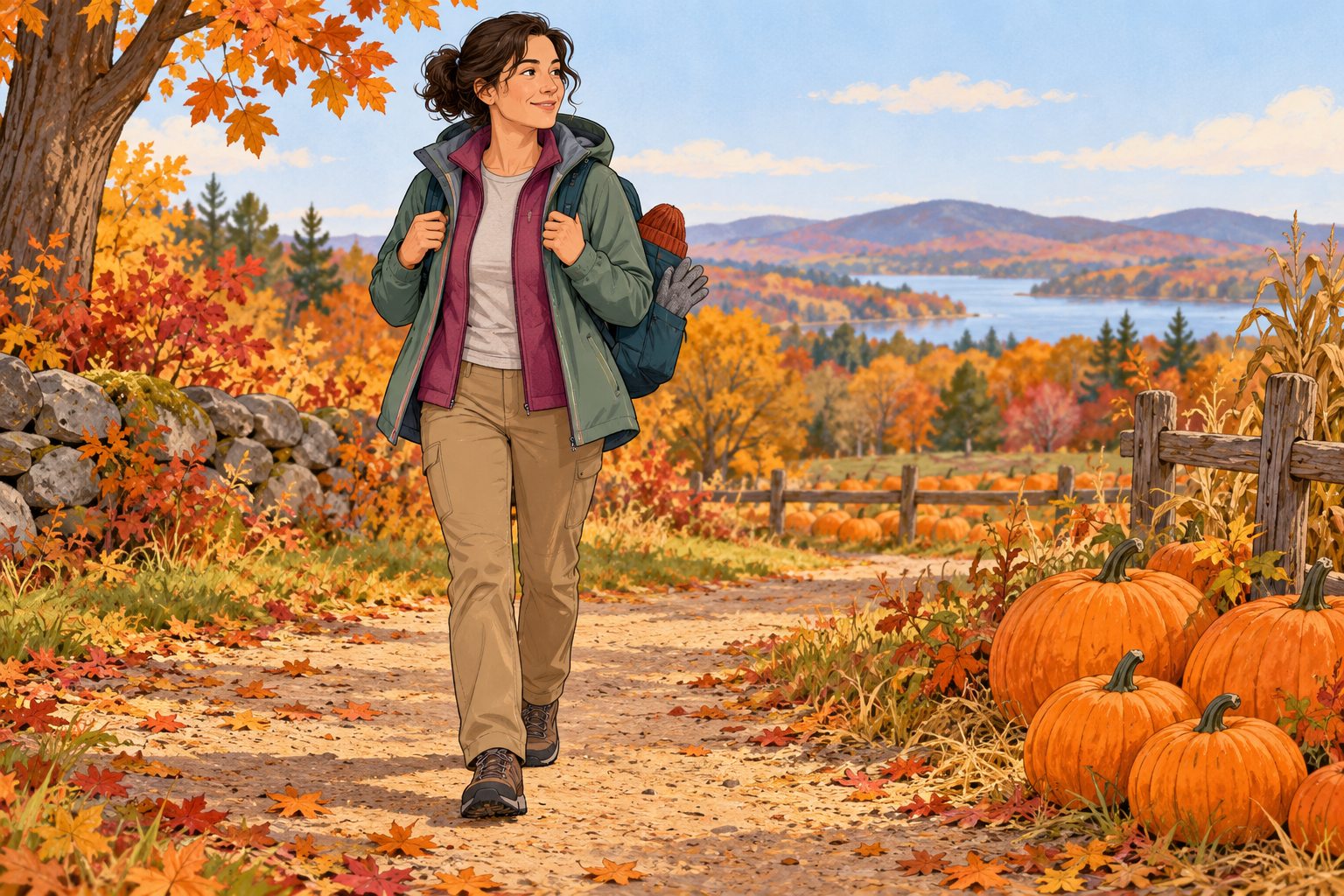
For a chilly pumpkin-patch visit or fall walk, choose a moisture-managing base layer, a removable warm middle layer and an outer layer suited to wind or rain. Check the forecast for the hours you will actually be outside, then adjust your layers as you move and stop.
You do not need a new outdoor wardrobe to enjoy a crisp afternoon. Start with suitable clothes you already own. This beginner guide is for ordinary cool-weather outings near shelter, not remote hiking, severe cold or storm conditions. Allow about 15 minutes to prepare; that is an estimate, not a timed test.
Illustration above: AI-generated generic scene, not a photograph or a specific product.
Why this topic now?
Checked October 27, 2026: the United States preview on Pinterest Trends showed the exact query “cold pumpkin patch outfit” up 200% weekly and 10,000%+ monthly. Its displayed historical graph spans July 31–October 23 and rises at the latest endpoint. This is Pinterest search-interest growth, not product sales or proof of wider demand; no forecast is used here.
What you need
- A local forecast covering the destination and outing hours
- A suitable base layer, removable fleece or warm jacket, and wind/rain shell
- Comfortable sturdy shoes, dry socks, and hat/gloves appropriate to the forecast
- A small bag for removed layers and spare dry clothing if needed
Steps
-
Check the whole outing forecast
Look at the destination’s hourly temperature, wind and rain, including your return time. Decide whether you will mostly walk or stand around. Fall mornings and evenings can be much cooler than the afternoon, as the National Park Service explains. Choose a shorter outing or postpone if conditions exceed your clothing or easy access to shelter.
-
Build the layers from the inside out
Start with a comfortable polyester or merino top to help manage perspiration. Add a fleece or other insulating middle layer. Finish with a shell appropriate for the expected wind or rain. A warm sweatshirt is not automatically a rain barrier. You can carry a layer instead of wearing it from the start. REI’s layering guide explains these three different jobs.
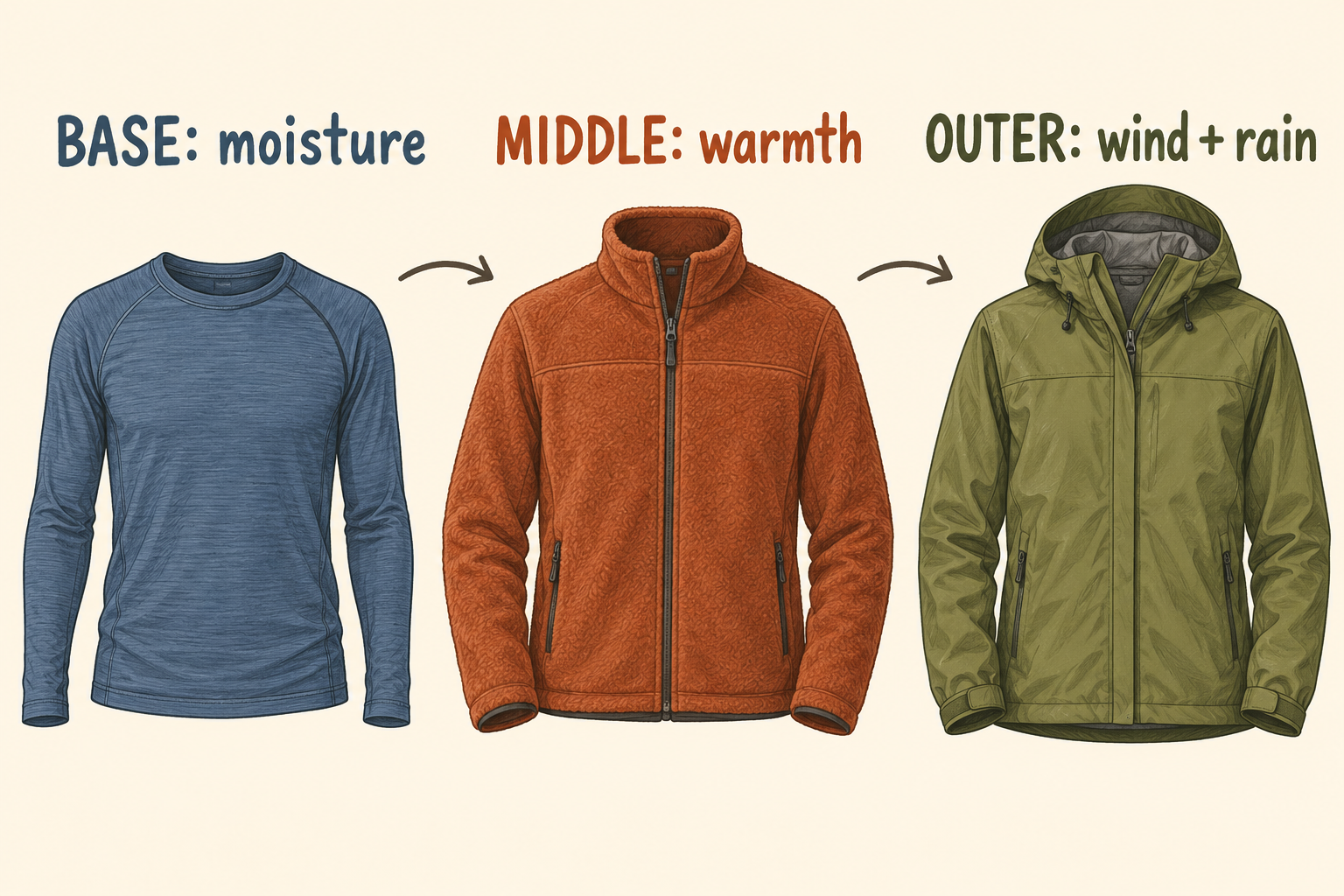
AI-generated generic illustration: the three layers have different jobs. Not a product photograph.
-
Check movement and add the small essentials
Put the combination on, zip it and reach forward, bend and sit. Swap a layer if the outfit pulls tight or restricts movement; more bulk is not always better. Add a hat and gloves if needed, and carry spare dry clothing when getting wet is plausible. NIOSH’s cold-weather clothing guidance emphasizes fit, layers and keeping clothing dry.
-
Match shoes to the ground, not only the outfit
Use comfortable, sturdy shoes or boots suited to the route. For wet grass or muddy paths, choose appropriate water-resistant or waterproof footwear and dry socks. Check the soles and fasten laces before leaving. The New York DEC outdoor checklist also recommends suitable footwear, rain gear and spare clothing. Leave room in a small bag for the layer you may remove.
-
Adjust before you become sweaty or chilled
As you warm up, open a zip or remove some insulation. Put warmth back on for a longer pause. If you get wet or cannot stay comfortably warm, head to shelter and change rather than pushing through. Recheck changing conditions; ordinary fall layers are not a substitute for severe-weather planning. See the National Weather Service’s cold-weather safety guidance.
Troubleshooting
- Clammy while walking: vent or remove a layer before you sweat more.
- Cold hands or ears: use suitable gloves or a hat, rather than only adding another torso layer.
- Tight shoulders: choose a roomier combination and repeat the movement check.
Quick questions
Do I have to wear all three layers all day? No. Carry what the forecast calls for and adjust to your activity; there is no single outfit for every temperature or person.
Do I need to buy new gear? Not necessarily. Suitable items you own may do the job. If you cannot dress for the conditions, change the plan rather than relying on a shopping shortcut.
What should I do afterward? Let damp items dry and follow their care labels. These related guides cover washing a rain jacket and cleaning muddy hiking boots.