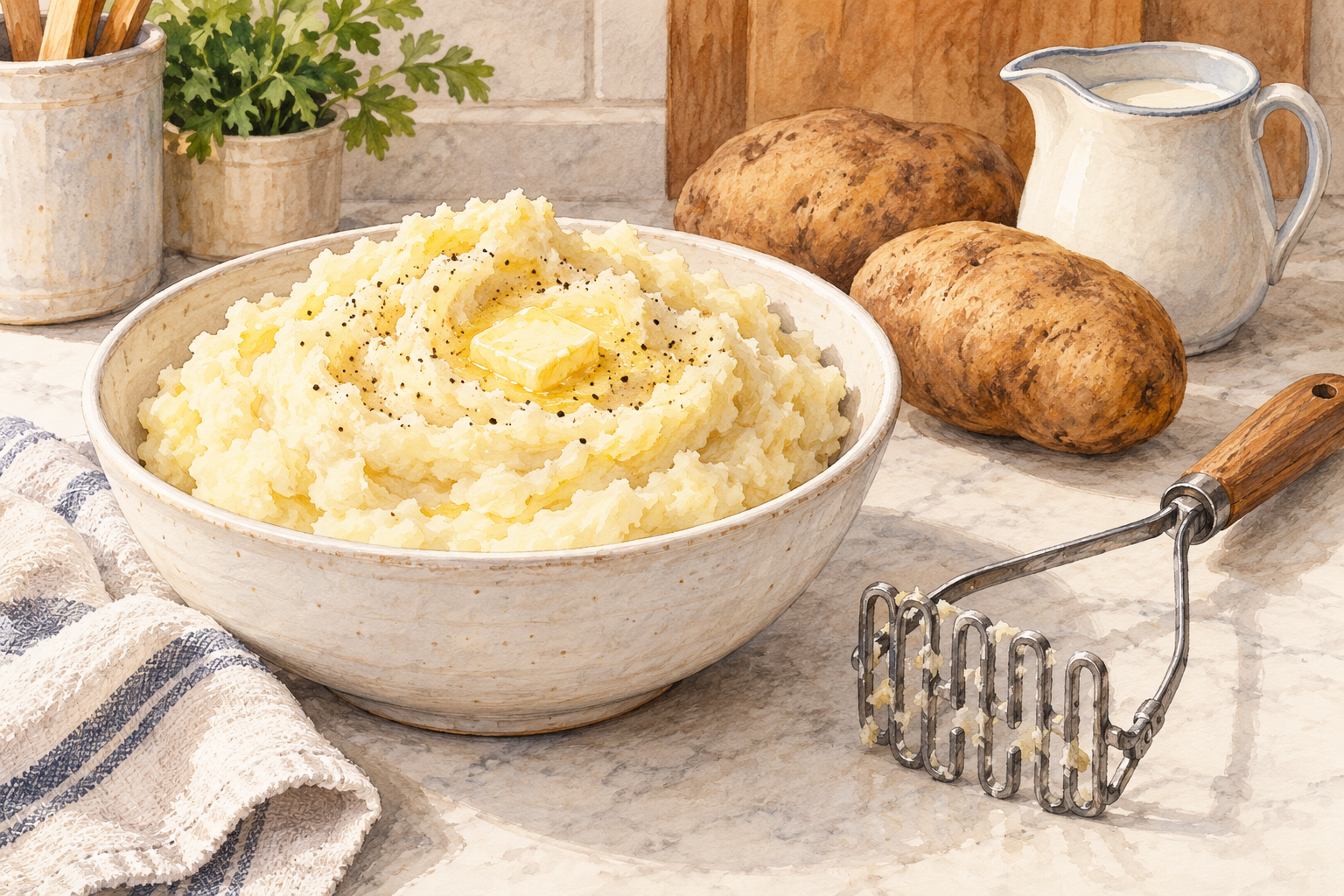
For fluffy mashed potatoes, cut the potatoes evenly, simmer them until a fork crushes the pieces easily, drain well, then mash by hand with butter and warm milk. Stop once the texture suits you: extra beating can make potatoes sticky, not smoother.
This beginner method makes about 4–6 side portions from 2 pounds of russet potatoes. Allow roughly 30 minutes total, including about 20 minutes of hands-on work; your stove and chunk size will affect the cooking time. A few small lumps are perfectly fine.
Hero image: AI-generated generic illustration, not a photograph of a tested recipe. This guide is researched from the sources below; it is not a report of hands-on testing.
Why this topic now
Checked November 1, 2026: Pinterest Trends, with United States selected, showed “Wheat-Free Diet” Pin saves up 300% month over month, with a displayed chart spanning August 5–October 28, 2026 and an upswing at its right edge. That is broad food-related saving activity, not measured growth in searches for mashed potatoes or proof of overall demand. This simple potato side is an editorial response to that broader interest, not dietary advice. If avoiding wheat for an allergy or another medical reason, check every ingredient label and prevent cross-contact.
What you need
- 2 pounds russet potatoes, scrubbed, peeled and cut into roughly 1-inch pieces
- 3/4 cup milk, warmed; add gradually rather than all at once
- 2 tablespoons butter; 1/2 teaspoon salt and 1/4 teaspoon black pepper, adjusted to taste
- Saucepan, colander, cutting board, knife, peeler, fork, potato masher and wooden spoon
Steps
-
Prepare evenly sized pieces
Wash your hands and scrub the potatoes under running water. Peel, then cut on a stable board into roughly 1-inch chunks. Similar sizes cook more evenly. Put them in a saucepan and add enough cold water to cover. Starting in cold water helps the centers and outsides cook together.
-
Simmer until truly tender
Bring the water to a boil, then reduce the heat to maintain a steady simmer. Start checking after about 13–15 minutes, but use tenderness rather than the clock as your finish line. Lift a piece out carefully with a spoon and test on a plate: a fork should crush it easily, with no firm center. Keep simmering if it resists. Be careful around steam and hot water.
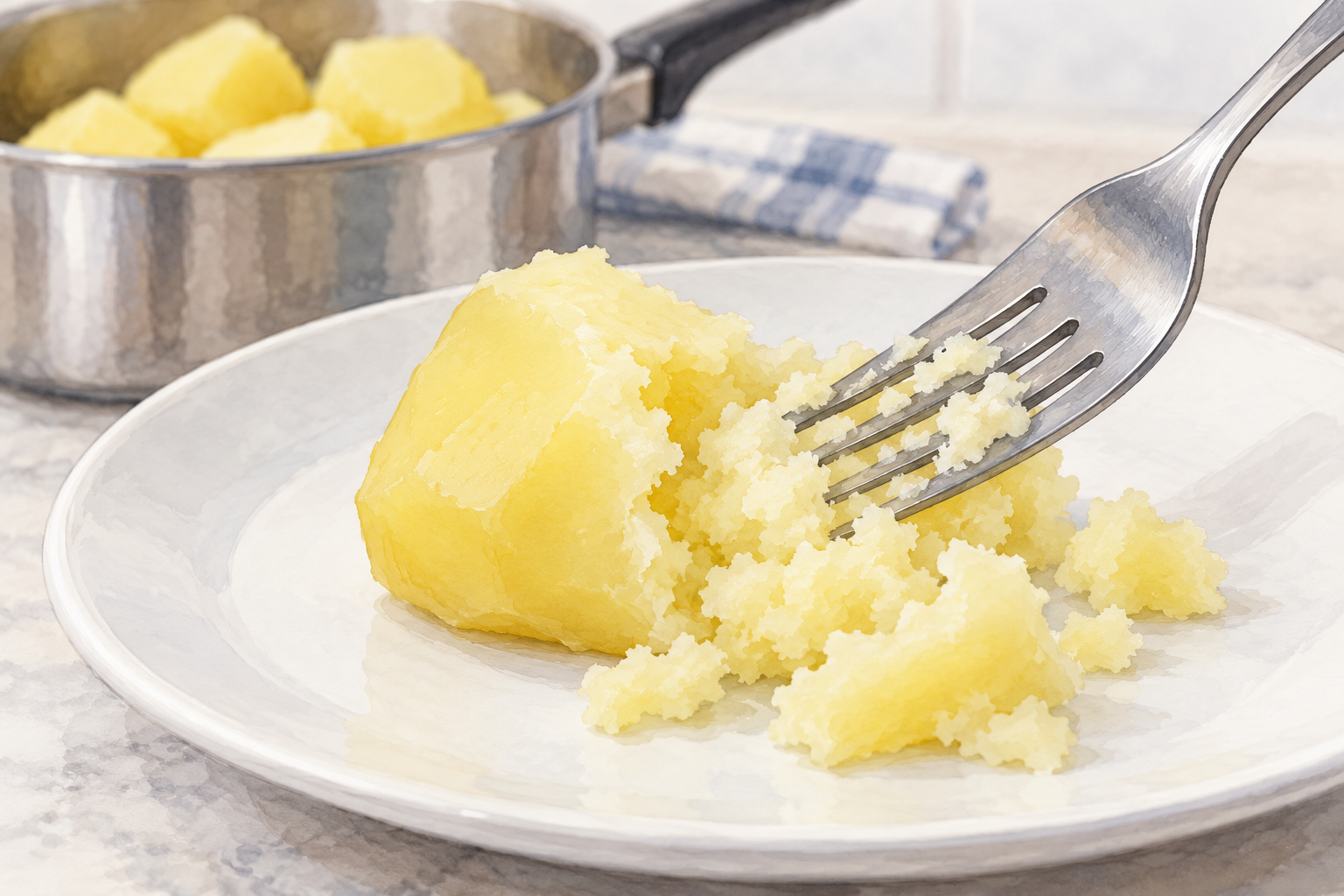
AI-generated illustration: a fully cooked chunk crushes easily with a fork; this is not a photograph of a cooking test. -
Drain and let excess water evaporate
Set the colander securely in the sink and drain carefully, keeping your face away from the steam. Return the potatoes to the empty pan over medium heat for about one minute, stirring gently so excess moisture evaporates. Remove from the heat. This short drying step helps prevent watery mash.
-
Mash gently, then add warm milk
Add the butter and press with a hand masher to break up the potatoes. Stir in the warmed milk a little at a time, stopping when the mash is as soft as you like; you may not need every drop. Add salt and pepper, taste, and adjust. Use a wooden spoon for the final gentle mixing, not a blender or food processor. Stop once combined rather than chasing every tiny lump.
-
Serve and refrigerate leftovers promptly
Serve while warm. For an easy meal setup, see our guide to setting a simple dinner table. Divide leftovers into small, shallow containers and refrigerate within two hours, or within one hour when the surrounding temperature is above 90°F. Keep the refrigerator at 40°F or below. Hot food can go straight into the refrigerator in shallow portions; do not leave it out until completely cool.
When reheating, bring the potatoes to 165°F throughout, measured with a food thermometer. Stir during microwave reheating and check several spots. Reheating does not make improperly stored food safe.
Troubleshooting and quick questions
Why are they gluey? Too much mixing releases excess starch. Stop working them; more beating will not restore fluffiness. Next time use a hand masher and stop sooner.
Why are there hard lumps? The potatoes probably needed longer cooking. Check several pieces for a soft center before draining; adding milk cannot replace that cooking step.
Too thick? Fold in a little more warm milk. Too loose? Avoid adding the full measure of milk automatically; drain and dry the potatoes thoroughly next time.
Do I need an electric mixer? No. A simple masher gives you control, and a few soft lumps are normal for a hand-mashed side.
Sources