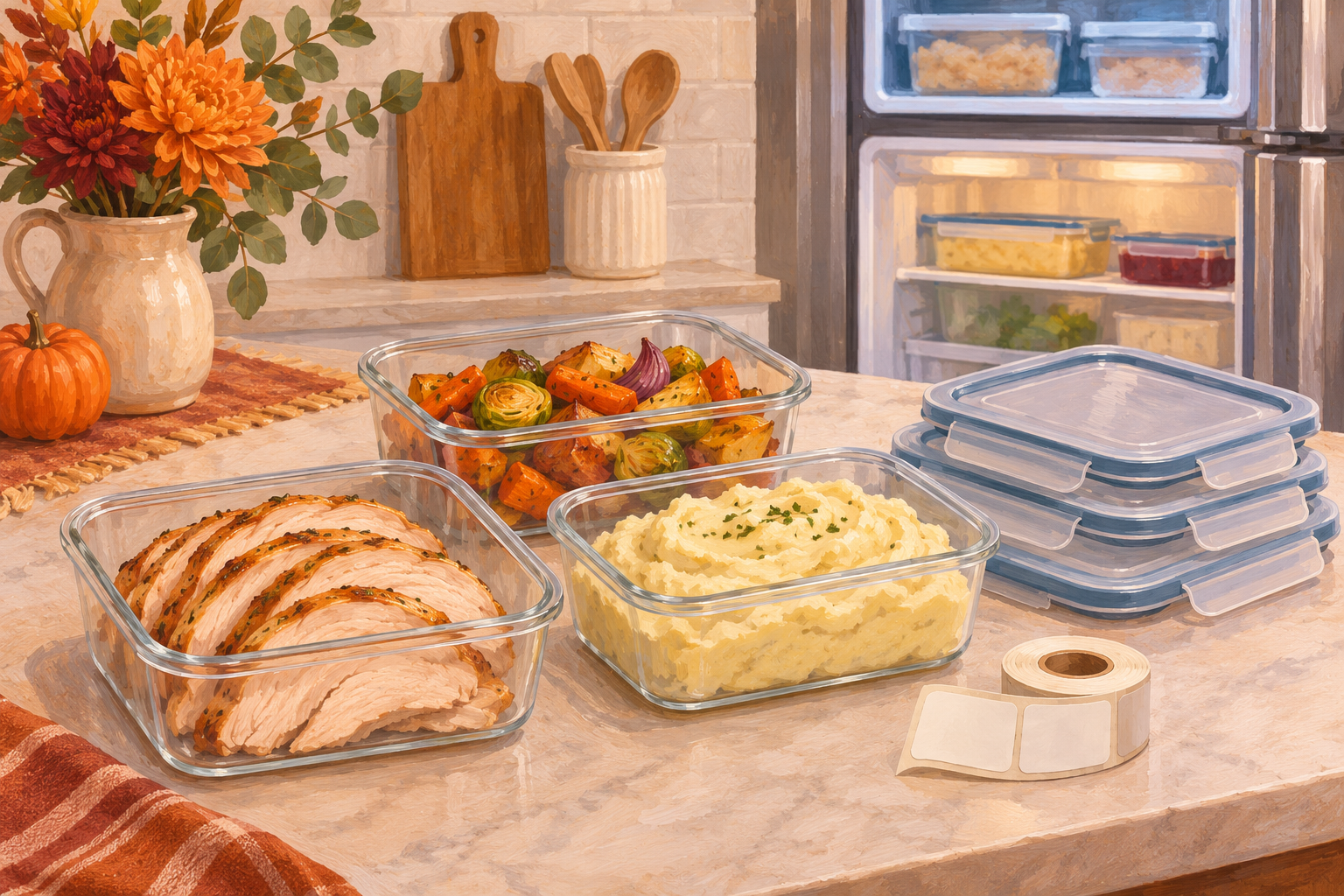
Pack Friendsgiving leftovers while the gathering is winding down: divide food into shallow containers, label it and get it into the refrigerator promptly. Choose freezer portions now instead of discovering forgotten boxes later.
This beginner guide takes about 15 minutes of hands-on packing for a small meal; cooling and thawing take additional time. It follows U.S. household guidance for properly cooked foods such as turkey, mashed potatoes and cooked vegetables. It cannot make food safe after uncertain or unsafe handling. Follow any stricter dish-specific storage instructions.
Before the meal: clear refrigerator space, find matching lids and set out labels. Check that the refrigerator is 40°F (4°C) or colder and the freezer is 0°F (−18°C) or colder with appliance thermometers.
Hero image: AI-generated illustration of portioned leftovers and packing supplies, not a photograph or evidence of a tested meal.
What you need
- Clean, shallow food-safe containers with matching lids; freezer-safe packaging for portions you will freeze
- Clean serving utensils, soap and water, and a clean work surface
- Labels or masking tape and a pen; a timer or clock
- Working refrigerator and freezer with appliance thermometers; a food thermometer for reheating
Steps
-
Check the time before saving anything
Work out how long each perishable dish has been out without temperature control, including serving and travel. Refrigerate within two hours, or one hour if the air temperature is above 90°F (32°C). Start packing early rather than using the limit as a target.
Discard food that has exceeded those limits. If you cannot establish that a dish was handled safely, do not save it. Smell and appearance cannot prove safety, and reheating is not a rescue for food left out too long.
Quick check: ask the person who brought the dish when it left refrigeration or hot holding. Packing it into a fresh box does not restart the clock.
-
Divide the meal into shallow portions
Wash your hands and use clean utensils and containers. Separate the turkey, potatoes and vegetables so you can take out only what you need for a later meal. Cut large cooked pieces into smaller portions and spread dense foods into shallow containers rather than filling one deep tub.
Do not leave a large pot on the counter until it feels cold. Hot food can go into the refrigerator in small portions. Choose containers that the manufacturer permits for the food temperature; damaged containers or packaging not intended for food storage are unsuitable.
Useful habit: pair every box with its lid before filling it. This avoids a last-minute search while the meal sits out.
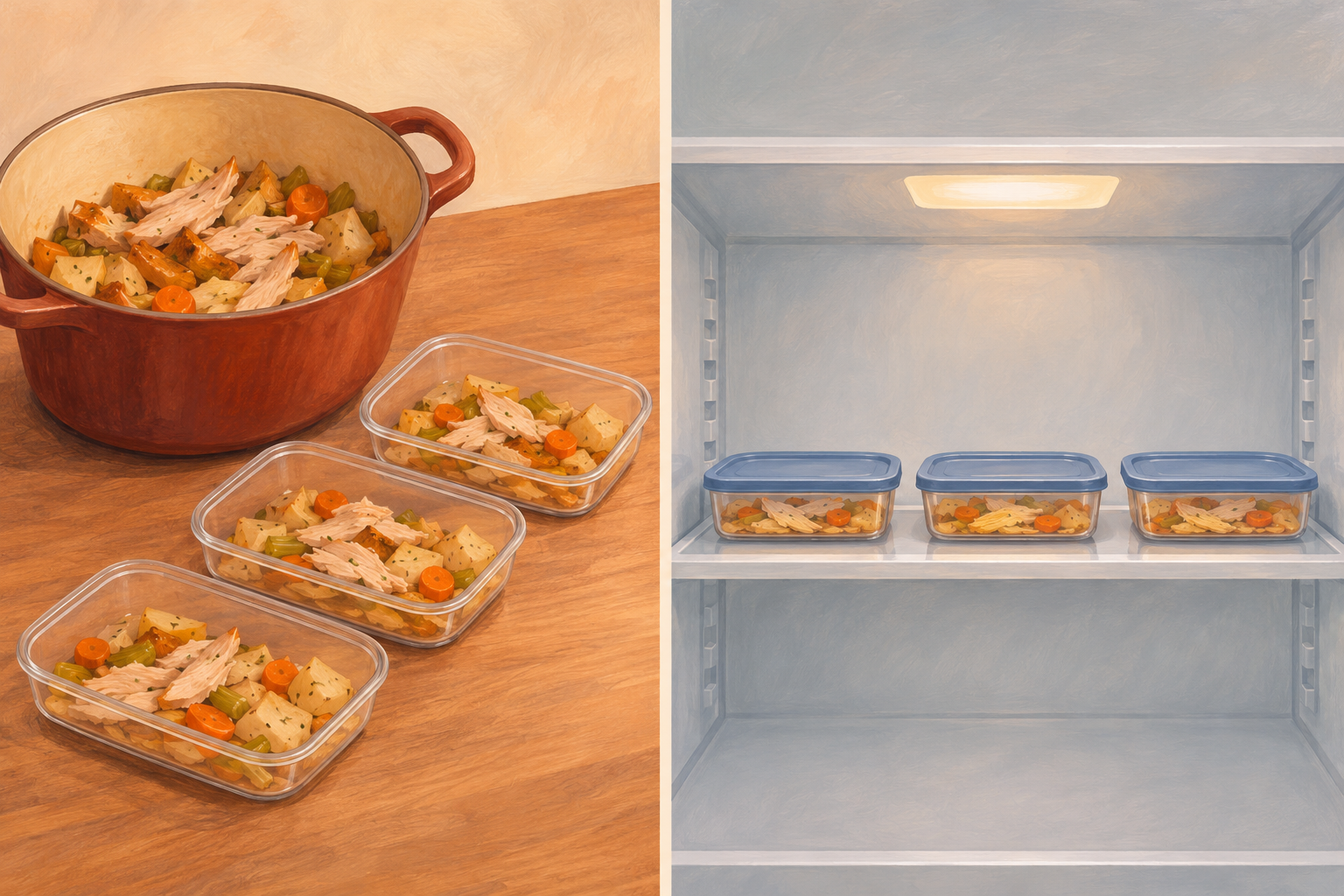
AI-generated illustration: divide food into shallow portions, then refrigerate covered containers with space for cold air to circulate. This is a visual guide, not a temperature measurement.
-
Cover and add a clear label
Close each container with its matching lid. Write the food name and original preparation date on a label, and add a planned eat-or-freeze date. USDA guidance is to use refrigerated leftovers within 3–4 days. Choose an earlier day if that suits your plans.
If a dish was cooked before the party, use that earlier preparation date rather than giving it a new storage period. Ask the cook if the date is unknown. Do not delay chilling to make neat labels: put the food away promptly and finish the labels with one container out at a time.
-
Refrigerate promptly with space around containers
Put the covered shallow containers into the refrigerator immediately. Arrange them with gaps so cold air can circulate, rather than tightly packing every shelf. Keep cooked food separate from raw meat and any leaking packages.
Check the appliance thermometer, not just a numbered control dial. The refrigerator needs to stay at 40°F (4°C) or below. Put the portions you plan to eat first where you can see their labels. A small note on the door can list what is inside, so you do not need to open every lid to make lunch.
-
Freeze portions you will not eat in time
Decide which portions fit your next few meals. Freeze the rest promptly in suitable freezer-safe containers or bags; do not wait until food is questionable. Add the freezing date while retaining the preparation date.
Keep the freezer at 0°F (−18°C) or below. Iowa State Extension recommends using frozen leftovers within 3–4 months for best quality. Freezing does not repair earlier unsafe handling. Use meal-size portions so you can thaw one lunch instead of a large block.
-
Plan safe thawing and reheating
Thaw a frozen portion in the refrigerator, not on the counter. When you reheat it, use a food thermometer to check that it reaches 165°F (74°C) throughout. Check several spots. In the microwave, use a microwave-safe container, cover appropriately and stir or rotate for more even heating. Follow your appliance instructions and allow the recommended standing time.
Done: each portion is covered, dated and promptly chilled or frozen, and you know which meal will use it.
Quick fixes and questions
- No matching lid? Transfer the food to another clean, suitable container you can cover securely.
- Fridge already full? Make space before serving. Do not treat a cool-feeling room, porch or car as a refrigerator.
- It smells fine but sat out too long? Discard it. Smell is not a food-safety test.
- Hosting next time? Set a packing reminder before guests arrive and put containers beside the serving supplies.
Sources and topic selection
- FDA: Refrigerator Thermometers — temperature checks, prompt chilling, hot food and safe handling.
- FDA: Cut Food Waste and Maintain Food Safety — covered storage, refrigerator space and meal planning.
- Iowa State Extension: Handling Leftovers and Food Safety — labels, storage periods, freezing and reheating.
Trend note, checked November 10, 2026: Pinterest Trends, with United States selected, showed “Friendsgiving Party Ideas” Pin saves up 100% versus last month. Its displayed historical chart range was August 14–November 6, 2026. This broader hosting signal informed the practical leftover-packing topic; it does not measure searches for this exact tutorial, sales or all-web demand.