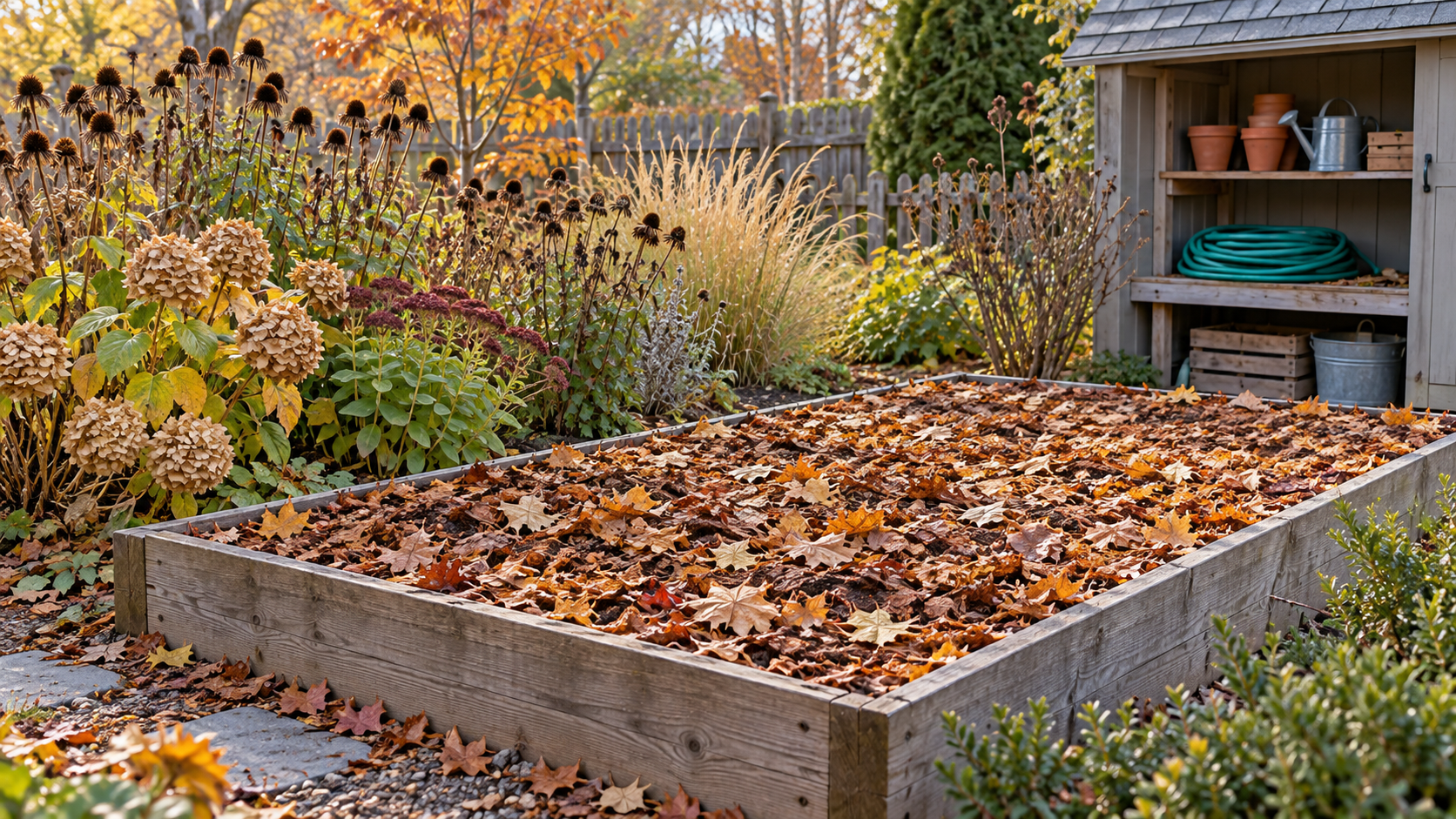
Prepare a garden for winter by removing diseased and spent vegetable plants, protecting exposed soil, keeping suitable healthy perennial stems, and draining portable hoses before freezing weather. Time winter insulation for dormant perennials separately: in cold climates, wait until the soil starts freezing.
This beginner checklist is for a small vegetable bed and nearby hardy perennials in a cold-winter US climate. Allow about 60–90 minutes of active work, with a later visit for winter mulch. Mild-winter gardens, tender plants and individual species need different care; check your local Extension guidance before copying a northern schedule.
Before you start
Check the forecast and identify plants you intend to overwinter. Harvest usable produce before its crop-specific cold limit, label dormant perennials, and choose a dry day when soil is not soggy. This guide covers hand cleanup and portable hoses, not underground irrigation winterization.
Illustrations are AI-generated examples, not photographs of a completed garden. Guidance checked October 17, 2026.
What you need
- Garden gloves, a hand rake and a container for plant debris
- Clean loose leaves or weed-free straw, plant labels and sheltered hose storage
Steps
-
Clear finished vegetable crops
After the final harvest, lift spent annual vegetable plants and gather fallen fruit. Pull accessible weeds by hand before they shed more seed. Keep healthy debris separate from diseased material. Do not pull out labeled overwintering crops or perennial vegetables.
Put disease-free material in your compost. Keep diseased plants out of an ordinary home compost pile; follow local yard-waste disposal rules. Remove rotten produce and disease-affected debris from the bed. Illinois Extension explains fall vegetable cleanup.
-
Choose what stays in the perennial bed
Keep healthy standing stems and seed heads where they suit the planting, and label plants that disappear in winter. Remove disease-affected foliage rather than applying a blanket cut-everything-back rule. Some plants need different treatment: for example, Illinois Extension recommends removing frost-damaged hosta leaves.
Healthy ornamental grasses and selected seed heads can provide winter interest and habitat. Check species-specific advice before cutting or covering a plant you cannot identify. Read the Extension guidance on what to leave standing.
-
Protect bare soil, then time winter insulation
Cover cleared vegetable-bed soil with a loose, even layer of clean leaf mulch or weed-free straw to reduce exposure to rain and wind. Keep labels visible and avoid burying crops that are still growing. Use material appropriate to the bed; do not pile wet, compacted leaves over living crowns.
Winter cover for dormant perennials is a separate job. In Minnesota-style cold winters, wait until the soil begins to freeze. UMN Extension recommends 5–6 inches of suitable loose material such as leaves or straw for perennial and bulb winter protection. That is regional winter-cover guidance, not a universal depth for every plant or year-round mulch.
Adapt depth and timing to your climate and species. Pull winter cover away as it thaws in early spring, while keeping protection available for a late freeze. UMN: when and how to mulch dormant perennials.
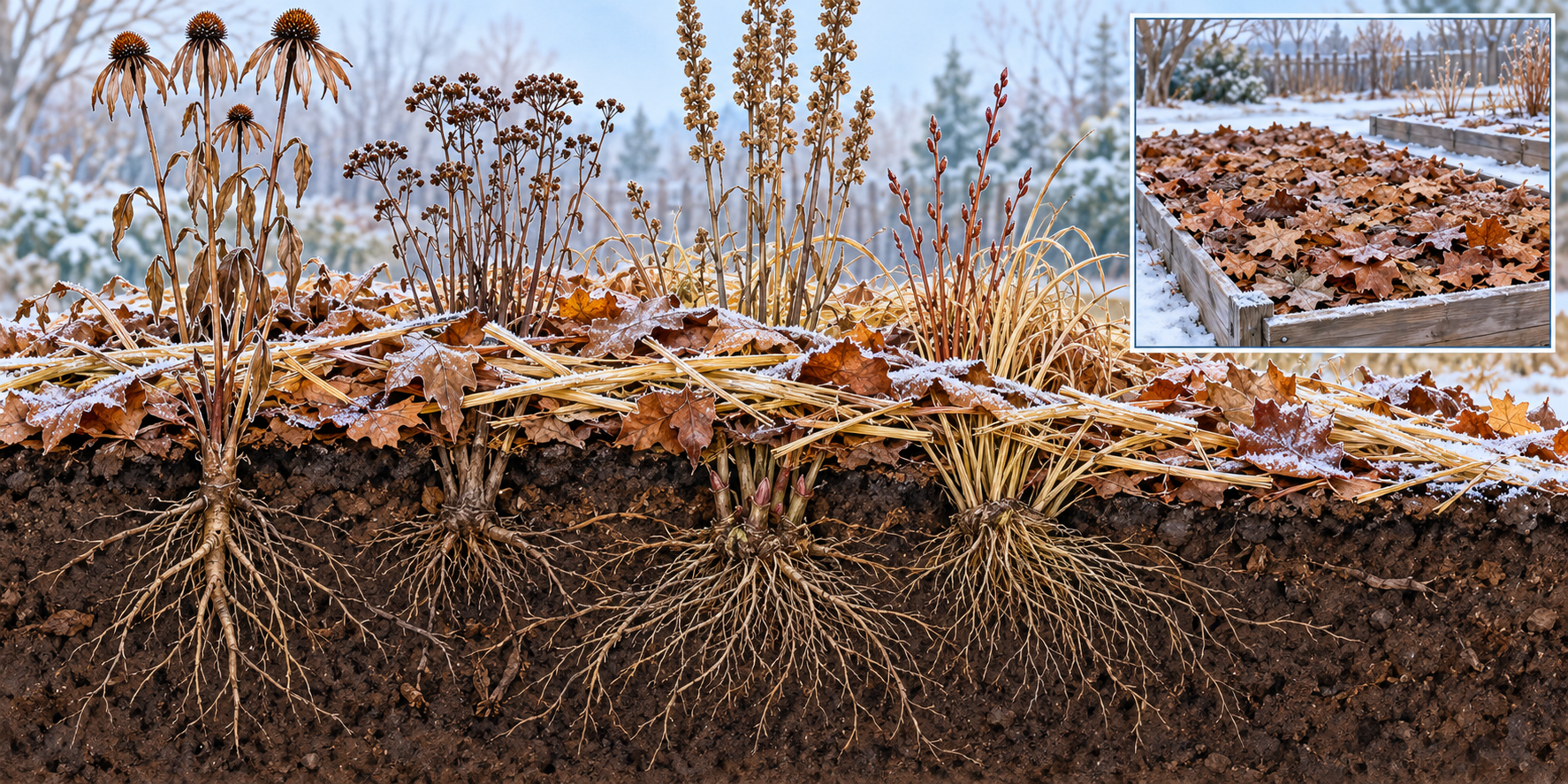
AI illustration: protect exposed soil, but time perennial winter cover for local conditions. The drawing is not a depth guide.
-
Drain and store portable garden hoses
After the final watering, turn off the outdoor faucet and disconnect the hose. Remove its nozzle, stretch the hose out where water can drain safely, and lift sections gently to let remaining water run out. Coil it loosely and store the drained hose and nozzle in a sheltered location before freezing temperatures.
A hose left attached can trap water even at a frost-free spigot. Follow the faucet manufacturer’s winter instructions. This simple hose task does not winterize underground irrigation or household plumbing; arrange appropriate professional help for those systems. Illinois Extension explains why hoses must be disconnected.
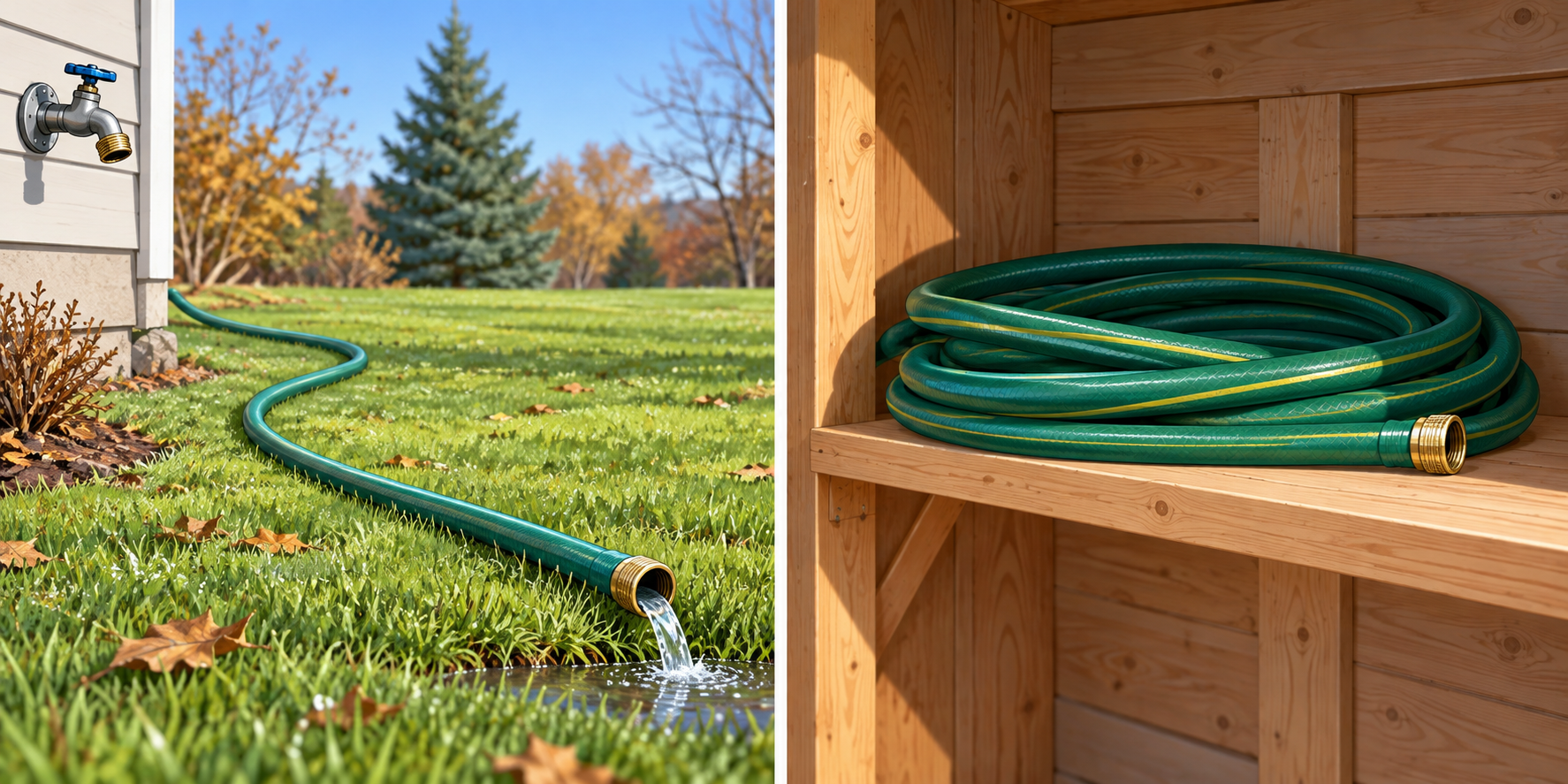
AI illustration: disconnect, drain and loosely coil a portable hose before freezing weather. -
Do a final walk-through and plan the spring check
Confirm that diseased debris is removed, healthy plants are labeled, bare vegetable soil is protected, and hoses are disconnected and stored. Note any plant-specific jobs still outstanding. Put a reminder on your calendar to check winter cover as the soil thaws, rather than leaving a heavy layer over emerging growth.
Frequently asked questions
When should I winterize my garden?
Work around your local forecast and each crop’s cold tolerance, not a fixed nationwide date. Clean up crops when they finish; disconnect hoses before freezing weather. In cold regions, add protective perennial winter cover once the soil begins freezing.
Should I cut every perennial to the ground?
No. Healthy stems and seed heads can stay where suitable, while diseased foliage needs cleanup. Hosta leaves and other species can require specific treatment. Identify the plant first.
Can I compost diseased plants?
For this beginner method, keep them out of a home compost pile and use locally accepted disposal. Ordinary piles may not reliably destroy plant pathogens.
Does this apply in a frost-free climate?
Only partly. Cleanup and soil protection may still help, but many mild-climate gardens remain productive through winter. Follow local planting schedules and avoid applying cold-climate insulation automatically.
Do I need to buy special winterizing products?
Usually not for these basic tasks. Use suitable clean leaves or straw, existing hand tools and sheltered hose storage. No product purchase is required by this tutorial.
Sources and review
The linked University of Illinois and University of Minnesota Extension guidance supports the cleanup, perennial, mulch and hose steps. For mulch selection and soil protection, see UMN’s mulching guide. Checked October 17, 2026. Local conditions and plant-specific guidance take priority.