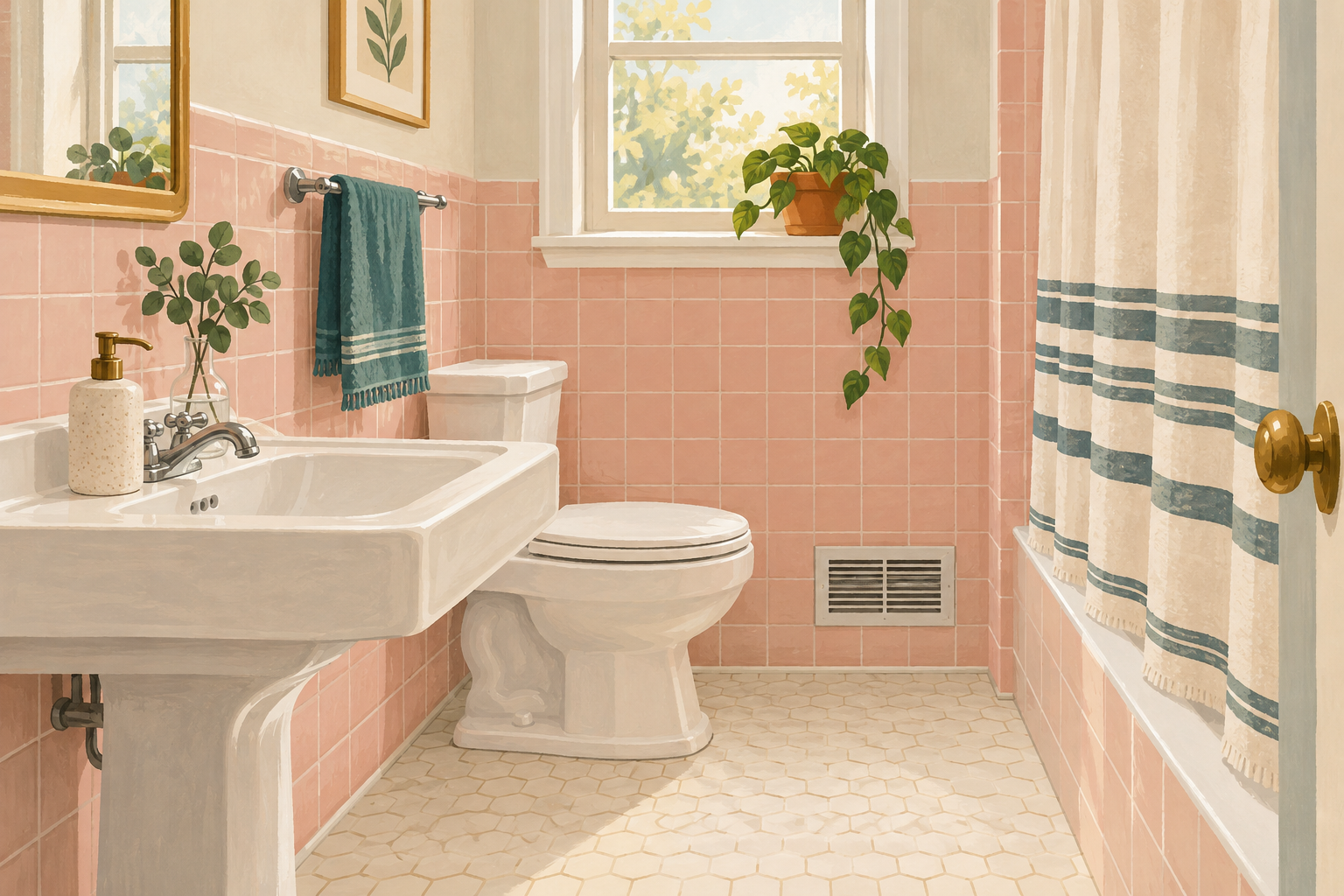
Refresh a retro bathroom by keeping the tile and fixtures, choosing one accent color, and changing only a few useful textiles or accessories. Start with what you already own. A coordinated towel and a clearer counter can make old pink, mint or cream tile feel intentional without a renovation project.
This beginner guide takes about 45 minutes of active planning and arranging, excluding laundry, shopping and any repairs. It is a styling exercise, not a plumbing, electrical, mold-removal or tile-restoration tutorial. No drilling, paint, adhesive coverings or fixture changes are needed.
Hero image: AI-generated generic illustration of a retro-inspired bathroom, not a photograph of a completed project. The illustration is a color example, not an installation plan.
What you need
- Paper and pencil or a notes app for a keep/change list
- Tape measure for existing towel and curtain space, if needed
- Clean towels and bathroom accessories you already own
- Optional washable bathroom textile in one accent color, only if your plan needs it
Steps
-
Make a keep list before changing anything
Stand in the doorway and note the tile color, floor, sink, mirror and existing rails. These are your starting point, not problems you have to hide. Choose one small frustration to fix: mismatched towels, a crowded sink or a curtain that dominates the room.
Clear away only loose items you no longer use. Leave medicines and cleaning products safely stored, not displayed for decoration. If you see a leak, damp damage or recurring mold, stop the styling project and address the cause with your landlord or an appropriate professional. Do not cover damage with decor.
-
Choose a three-color plan on paper
Write down the existing tile color, one neutral already in the room, and one accent you enjoy. For example, pink tile plus cream fixtures can work with a muted teal towel; green tile can be paired with cream and a warm brown accent. These are optional styling ideas, not rules about historic accuracy.
Place an existing towel or fabric beside the tile and look at it in the room’s usual light. Pick just one pattern, such as stripes, if the tiles are already busy. Sketch the combination before buying anything. The aim is a connected look, not a perfectly matched set.
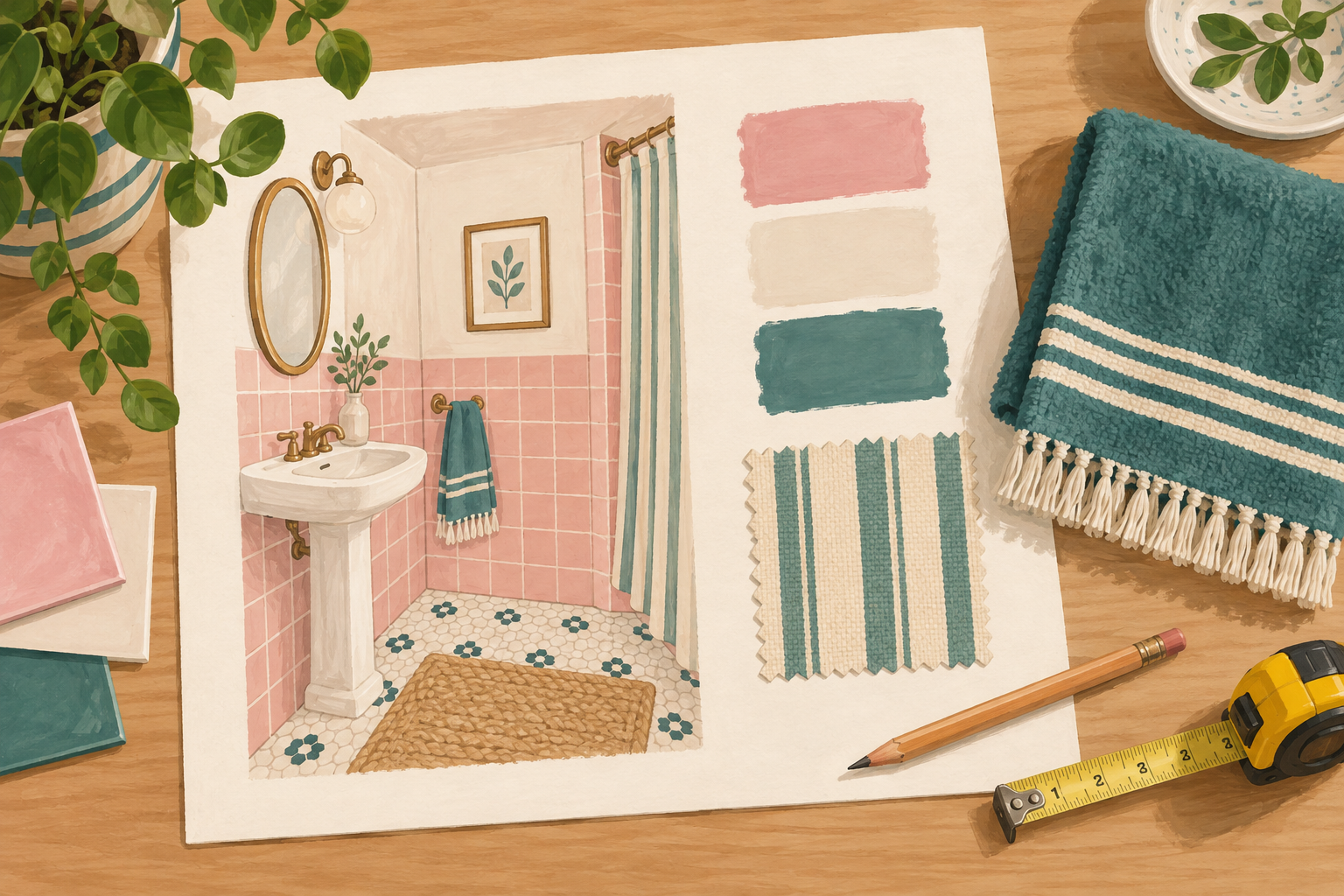
AI-generated generic illustration: a simple color-planning example, not a photograph, product recommendation or technical bathroom plan.
-
Check sizes and reuse what fits
Measure any space where a replacement textile would go, and compare with the item you already have. For a shower curtain, note the current width, hanging height and hook arrangement; retain a properly fitting liner where the existing setup needs one. Do not add fabric that trails on the floor or interferes with the shower door.
Gather only the pieces that support your plan: perhaps one hand towel, a curtain you already own and a sturdy soap dispenser. Wash textiles according to their care labels before use if needed. The 45-minute estimate excludes washing and drying. Make a short “missing items” list rather than buying a whole collection.
-
Change one textile, then arrange the essentials
Try the accent towel on an existing rail first. Step back and decide whether that is enough. If you change a curtain, use the existing sound, compatible rod and hooks, following their instructions; do not climb on the toilet or tub to reach it. Skip an awkward or unsafe change.
Keep soap and daily-use items stable and back from the counter edge, with clear space around the sink. Avoid glass decorations where they could fall into the bath or onto bare feet. Leave vents, switches and fixtures unobstructed. This guide does not require new wall hangings, adhesive tile, electrical accessories or decorative candles.
-
Do a function and safety check
Open the door and any cabinet fully. Walk the usual route to the sink and shower: nothing should snag, fall or narrow the path. Keep the floor dry and clear. If you use a bath mat, choose a suitable slip-resistant one that lies flat and follow its care and use instructions; do not layer loose rugs just for the look.
Keep normal ventilation working. EPA advises using a bathroom fan that exhausts outdoors, or opening a window when conditions allow, during and after a shower. Decorations are not a solution for moisture. Do not place plug-in lamps or other electrical decor near water.
-
Keep the useful changes and edit the rest
Take one final look from the doorway and remove anything that makes cleaning or everyday use harder. Keep towels able to dry between uses. If the result feels too busy, remove a pattern before adding another accessory. Try the arrangement through your normal routine before spending more.
Troubleshooting
- The old tile still feels dominant: repeat a small amount of its color in a towel, or keep the added textiles neutral. You do not have to disguise every surface.
- The counter is crowded: remove decorative pieces first. Storage and safe access matter more than a styled photograph.
- Textiles stay damp: check the care instructions and ventilation; do not pile extra fabrics into a small bathroom. Investigate persistent moisture instead of masking it.
Frequently asked questions
Can I do this in a rental? The plan uses loose accessories and existing fittings only. Check your lease and get permission before any later permanent change.
Do I need vintage objects? No. A simple color combination can suggest a retro mood without fragile antiques or new purchases.
Should I paint or cover the tile? Not for this project. Surface coatings and adhesives need a separate assessment of material, moisture exposure, removal risks and any landlord requirements.
Why this topic now?
Checked October 27, 2026: Pinterest Trends, United States, reported Retro Bathroom Styles Pin saves up 1,000% versus last month. The displayed historical range was August 1–October 24, 2026, and its indexed 0–100 graph rose sharply toward the latest endpoint. This is Pinterest saving activity, not search volume, sales, proof of overall demand or a forecast. The styling method here is an original practical adaptation, not a claim that it has been hands-on tested.
Sources and a related guide
- Pinterest Trends — select United States and Retro Bathroom Styles to see the Pin-saves topic and history.
- IKEA: bathroom styling with textiles — coordinating color and texture without changing the room’s fixtures.
- EPA: moisture control and ventilation.
- CPSC: Home Safety Checklist — clear walking surfaces and slip-resistant flooring.
For a separate maintenance task, see our shower-head cleaning guide; check its material-specific cautions before using a cleaner.