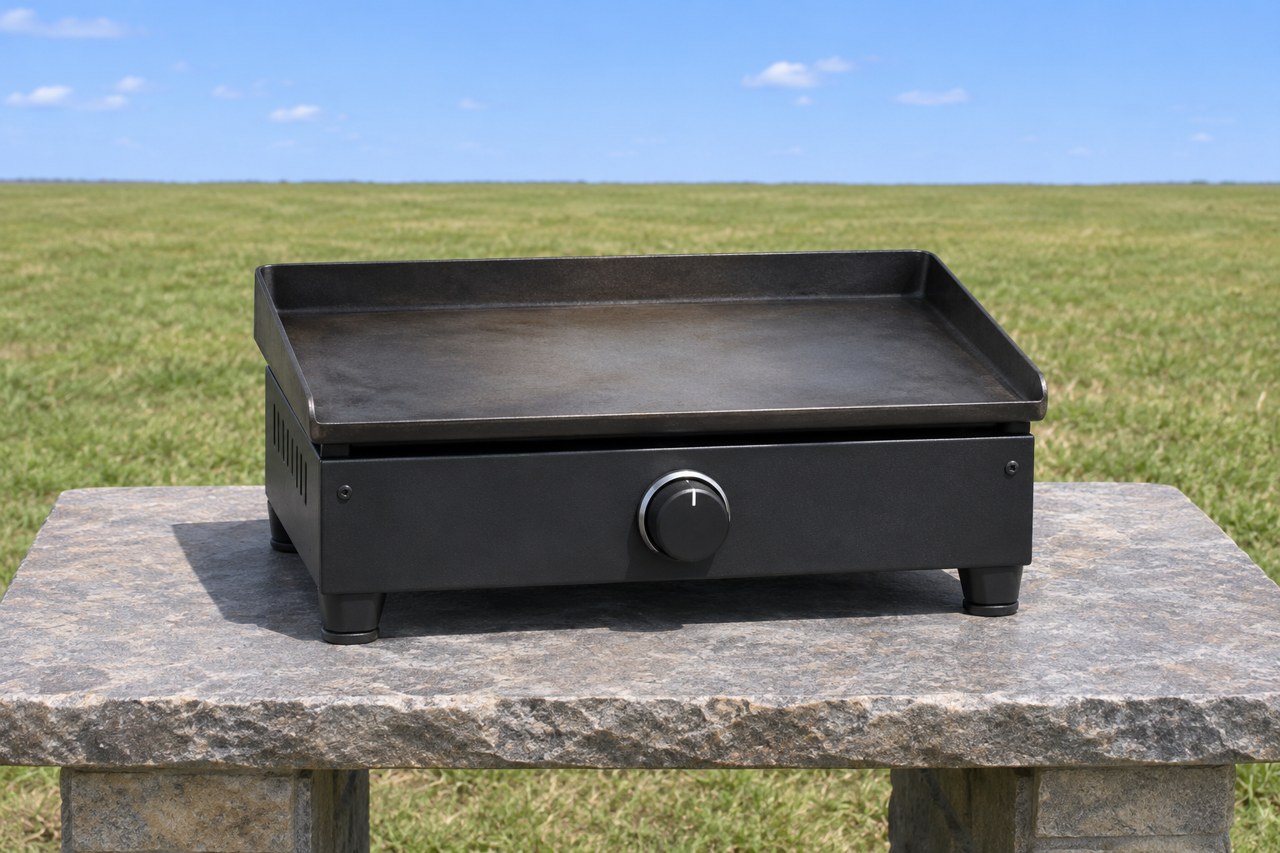
To season a new Blackstone griddle, clean and dry the bare steel, heat it outdoors, and spread a thin coat of oil. Let the coat finish smoking before adding the next one. Several thin coats build a stick-resistant surface and help protect the steel from rust. A puddle of oil can leave a sticky patch instead.
This guide is for outdoor gas models with a bare steel cooking plate. Follow the manual for your model if it differs, especially for placement, lighting, and shutdown. Allow about 15 minutes of hands-on work plus roughly an hour of attended heating, sometimes longer, and time to cool.
Hero image: AI illustration of a tabletop griddle with a seasoned steel surface.
What you need
- Owner’s manual for your model
- Mild dish soap and water
- Soft cleaning cloth and dry towels
- Canola oil or manufacturer-approved griddle conditioner
- Long metal tongs and folded paper towels
- Heat-resistant grilling gloves
Steps
-
Set up outdoors and wash the cold plate
Choose a stable, level, heat-resistant surface in the open air, at least 10 feet from buildings and clear of overhangs. Never operate a gas griddle in a garage, carport, or on a covered porch. Stay with it while it is hot and keep kids and pets clear.
With the griddle cold, the burner controls off, and the gas supply disconnected as your manual directs, wipe the new plate with a cloth and a little dish soap and water. Wipe off the soap with clean water and dry the plate completely. Keep wash water out of the burner housing.
-
Preheat and wipe on a very thin coat
Connect the fuel supply, perform the checks in your manual, and follow its ignition sequence. Preheat as directed until the bare steel starts changing color. Blackstone’s general guide calls for high heat. If you smell gas or suspect a leak, stop and follow the manual’s emergency instructions.
Using long metal tongs and a folded paper towel, spread a small amount of canola oil or an approved griddle conditioner over the plate and its inner steel sidewalls. Keep hands away from the hot plate. Aim for a slight even sheen with no beads, streaks, or puddles. Follow any oil guidance for your model rather than using the same quantity on a 17-inch and a 36-inch plate.
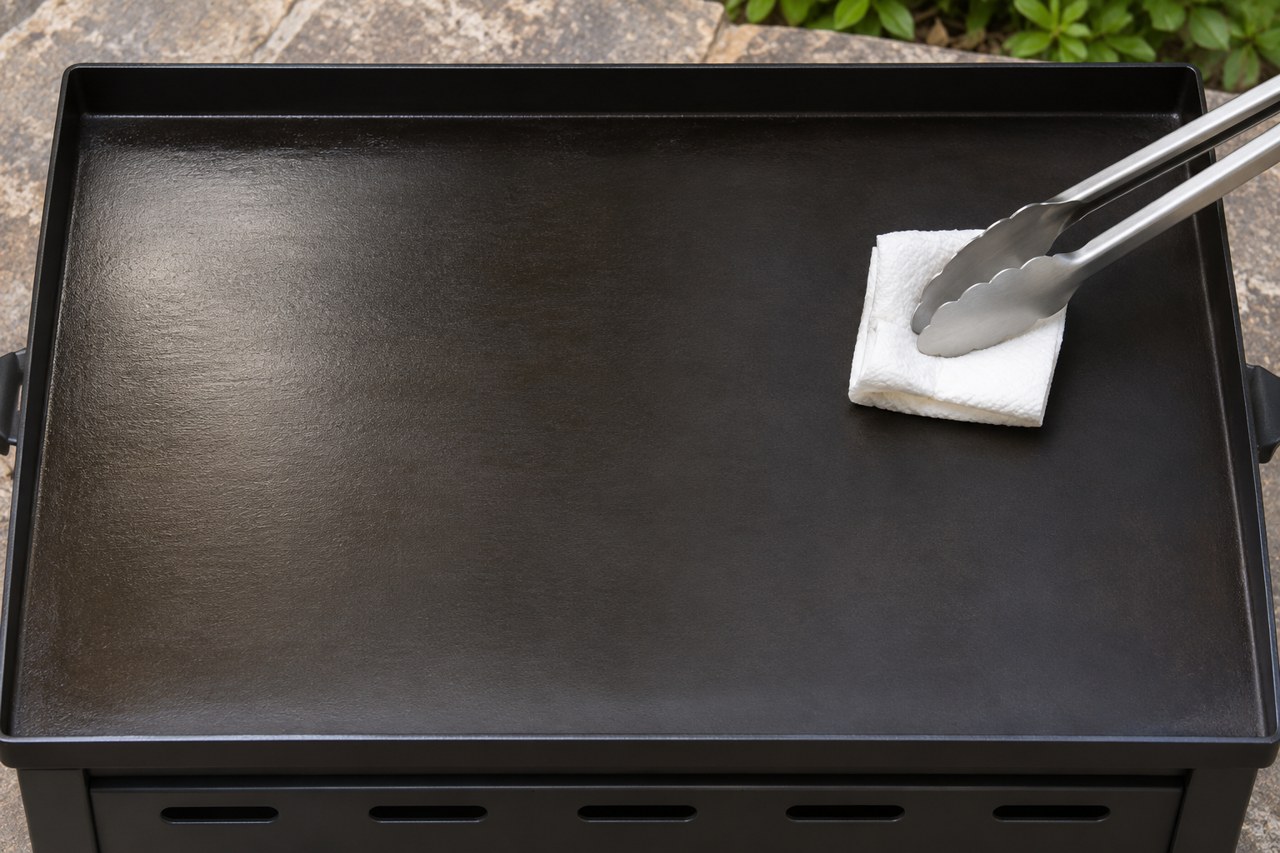
AI illustration: tongs and a folded towel spread oil into a thin sheen. The griddle is shown cool to illustrate the film, not how to position tools over heat. -
Wait for the smoke to stop, then repeat
Stay with the griddle while the thin oil coat heats. When that coat stops smoking, spread the next thin coat. Follow your model’s recommended number of coats; Blackstone’s general guidance calls for several passes. Do not add more oil to a coat that is still smoking.
The center usually darkens first. Lighter corners are common and can darken during normal cooking. Stop after the recommended coats rather than chasing the same shade across the whole plate.
-
Shut down and let the griddle cool
After the final coat stops smoking, turn off the griddle and shut off the fuel as directed by the manual. Leave it uncovered until fully cool. Handle used oily towels carefully and keep them away from hot surfaces, burners, and flame. After future cooks, clean and dry the plate and wipe on a barely visible film of oil before storing it dry and covered.
Why does the surface feel sticky?
A tacky brown patch usually points to too much oil or a coat that did not finish bonding. Once you can handle the griddle safely, check your manual’s cleanup instructions to remove the residue, then re-season with a thinner coat. Adding oil on top of the sticky patch does not fix it.
Does every corner have to turn black?
No. A darker center with lighter corners is normal early on. For a different cleaning job, use the guide to cleaning stainless steel appliance exteriors without streaks. That method is for exterior finishes, not the seasoned cooking plate.
Sources