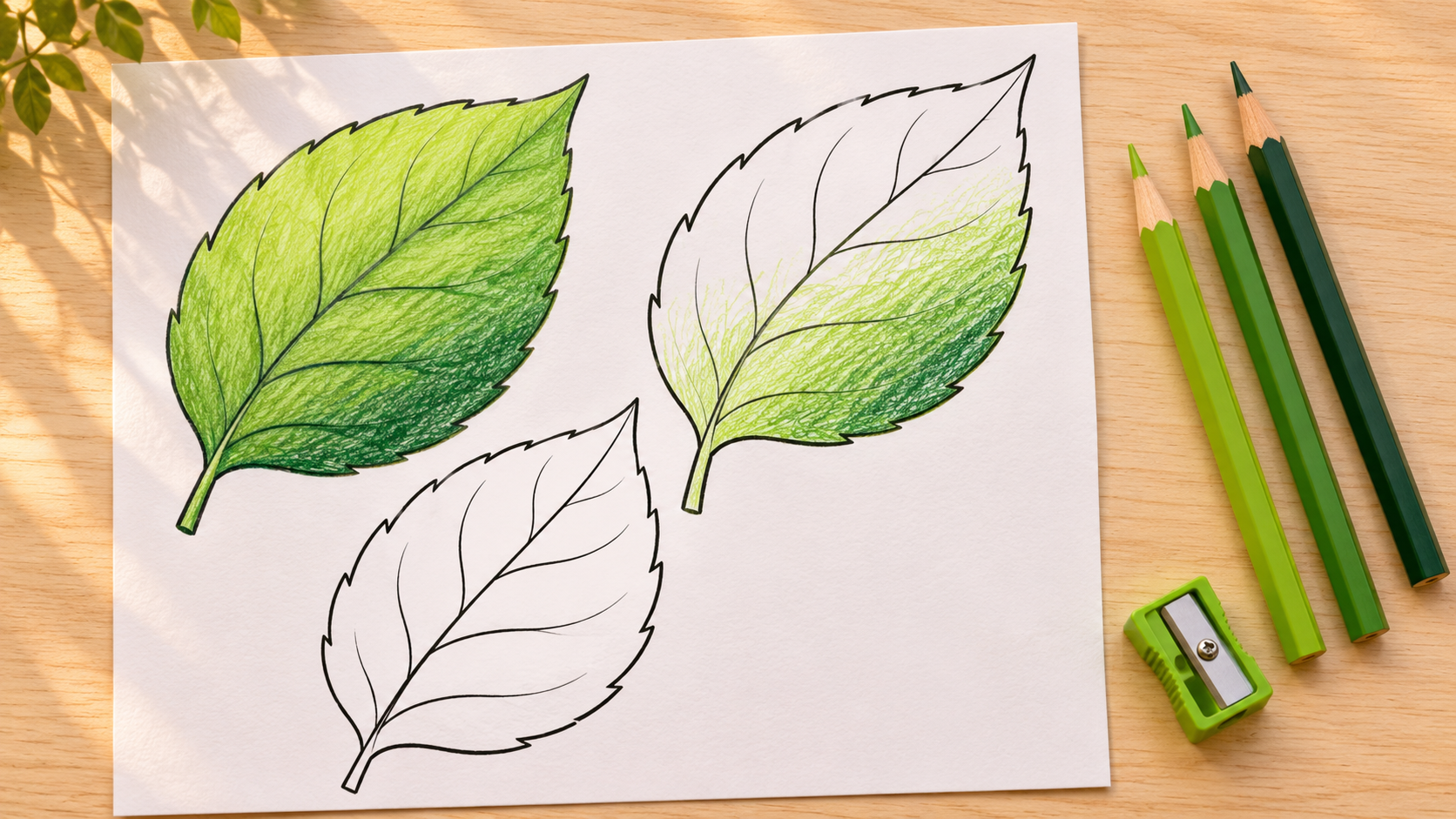
Give a simple leaf, flower or other large shape more depth with three shades and a light touch. This beginner exercise uses dry colored pencils and takes about 25 minutes for one practice shape. Paper and pencil formulas vary, so test a small swatch before working on a favorite page.
Hero image: AI-generated illustration of a leaf-coloring workspace, not a photograph of a tested result.
Why this topic now: In its November 3, 2026 report, eRank reported U.S. Etsy searches for “coloring book” at a 15-month high in October, up 164% from October 2025. This is marketplace search interest, not a sales figure or a claim that every coloring style is growing.
Use a page you own or have permission to print. This guide contains no affiliate links. The illustrations are AI-generated examples.
What you need
- A coloring page with a large simple shape, or a leaf outline you draw yourself
- Three dry colored pencils in light, medium and dark versions of one color
- Scrap paper similar to the coloring page for a test swatch
- A pencil sharpener and a smooth, firm work surface
- A spare clean sheet to rest your coloring hand on; a colorless blender pencil is optional
Steps
-
Choose one shape and test the colors
Start with a large leaf rather than a whole detailed page. On scrap paper, make a small swatch with each pencil, then overlap them. Choose a light, medium and dark shade that work together. Sharpen gently and brush away loose shavings. An adult should supervise a child using the sharpener.
-
Keep a light area and add a pale base
Imagine light arriving from the upper left. Keep that part of the leaf very pale. Hold the lightest pencil at a shallow angle and cover the shape with gentle strokes. Let some paper texture show. Faber-Castell recommends light pressure and a shallow pencil angle for even shading.
-
Build the middle shade gradually
Add the medium pencil to the lower-right half of the leaf. Use small overlapping circles or short strokes, easing off as you approach the pale area. Avoid drawing a hard dividing line. Add another light layer if needed, rather than trying to darken everything in one pass.
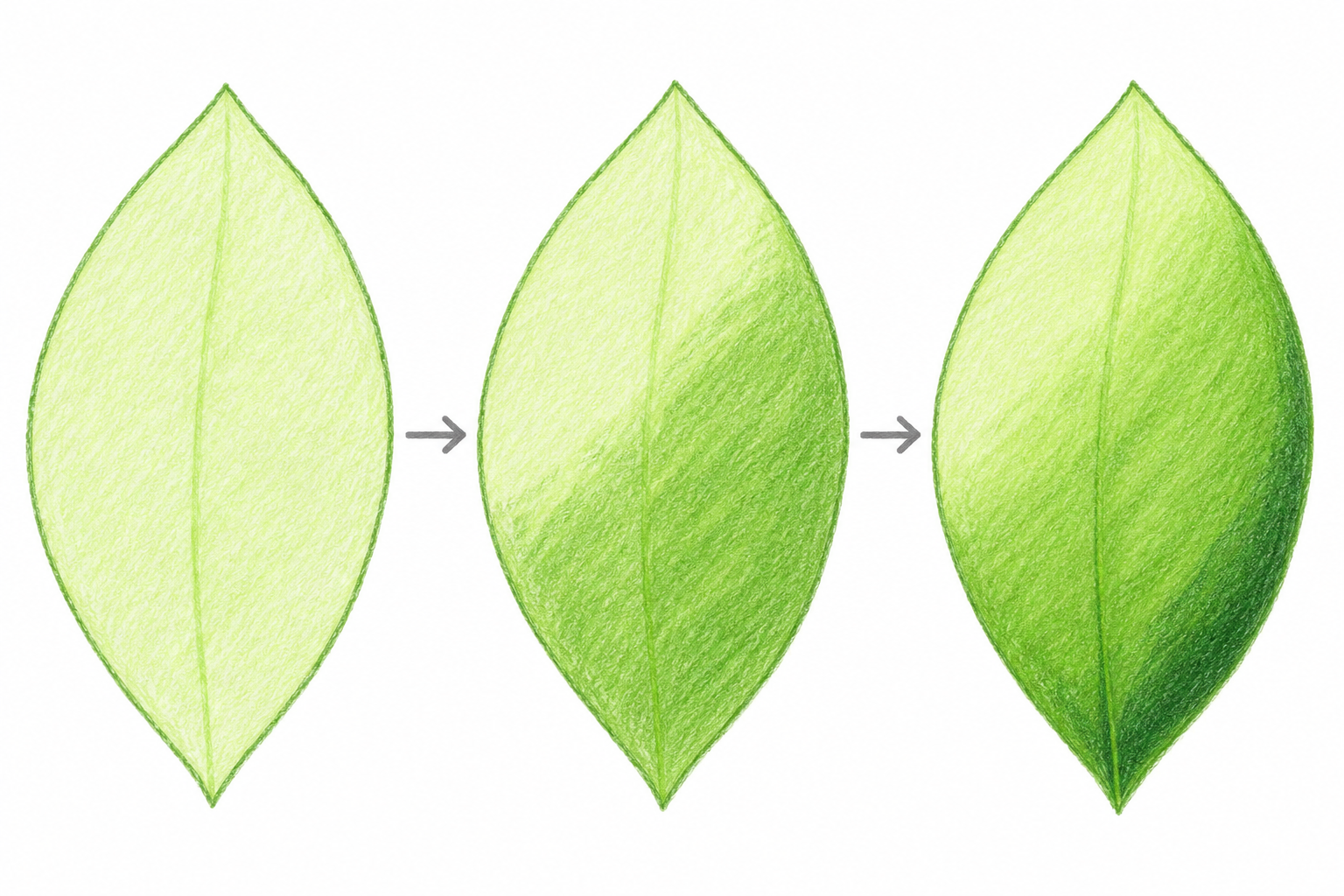
AI-generated illustration: a pale base, a middle layer and a small shadow area. The example shows the intended progression rather than a photographed result.
-
Add a small dark shadow
Use the darkest pencil near the lower-right edge. Keep this area smaller than the middle shade so the leaf still has a clear light side. Soften its inner boundary with the medium pencil using light, overlapping strokes. Leave the upper-left highlight alone. Step back briefly to compare the three values.
-
Soften transitions without scrubbing
Pass the light or medium pencil gently over any abrupt boundary, keeping the pale highlight visible. A colorless blender is optional: test it on the swatch, then use it only after the colors are in place. Prismacolor advises light pressure and coloring before blending. Stop if the paper starts to scuff or more pigment will not take. This dry exercise needs no water, oil or solvents.
-
Check the result and repeat on the next shape
Look for a pale side, a middle tone and a smaller dark area. A little paper grain is normal. If the leaf looks flat, deepen only the shadow. If the highlight is already too dark, keep this as practice and start more lightly on the next shape. Rest your hand on a clean spare sheet and move it as you work. Keep the imagined light direction consistent across the page.
Technique sources: Faber-Castell’s Coloring Techniques and Prismacolor’s Colorless Blender Pencils. Sources checked November 10, 2026. This is an original beginner exercise based on those general techniques, not a claim of hands-on product testing.