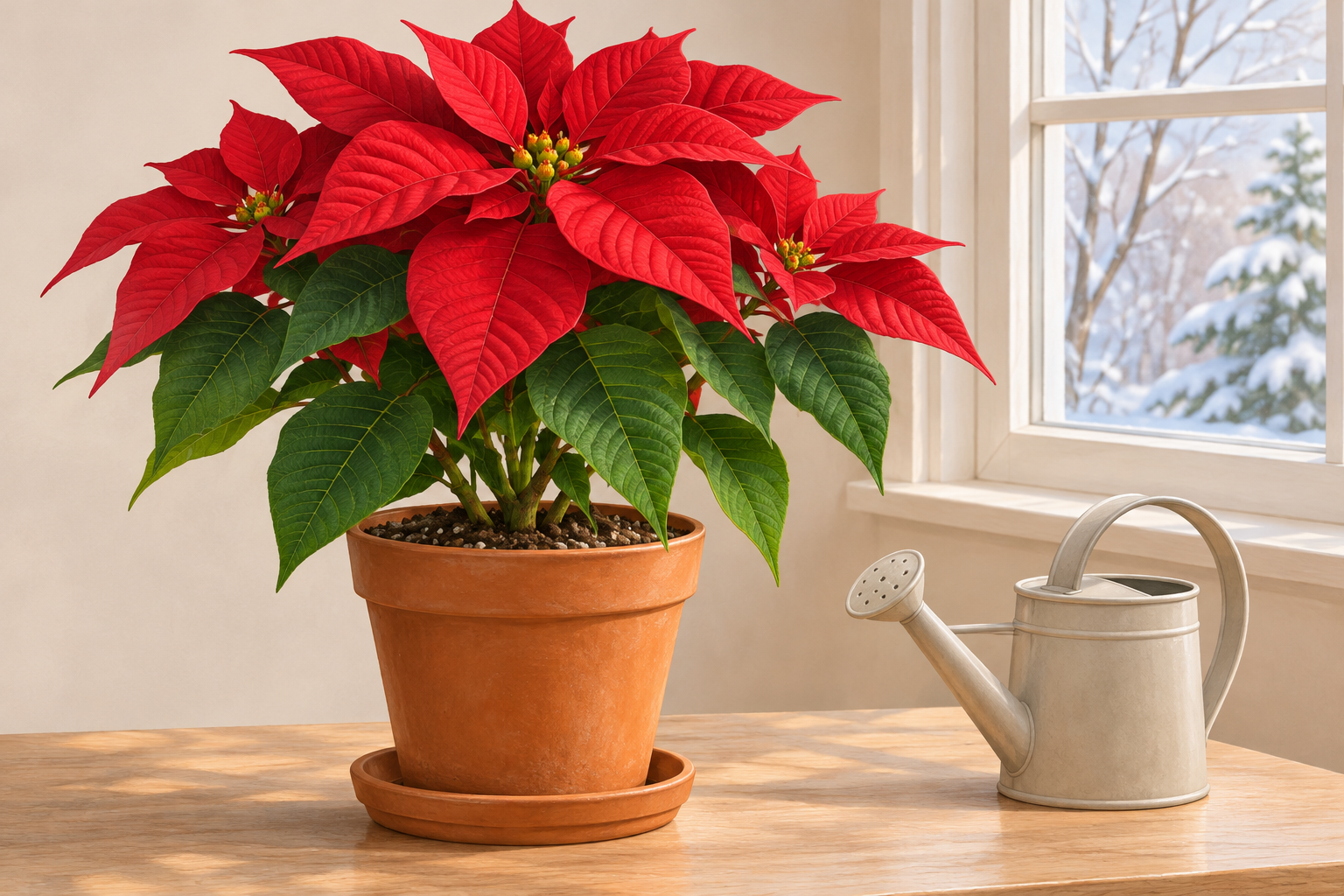
A poinsettia can look thirsty while its roots are already too wet. This short routine helps you decide whether to water, drain the pot properly and return it to a suitable indoor spot. Allow about 10 minutes of hands-on time, plus time for excess water to drain.
Before you start: Keep the plant away from children and pets. Its milky sap can irritate skin and eyes; avoid breaking stems and wear gloves when handling damaged parts. ASPCA lists poinsettia as toxic to cats and dogs because the sap can irritate the mouth and stomach. Contact your veterinarian if a pet eats it.
Hero image: AI-generated illustration of a poinsettia and watering can; not a photograph of a tested plant.
Why this guide now: Made to Spark’s November 2026 report lists US Pinterest searches for “poinsettia” at 1.5 times its October comparison. The publisher says it read Pinterest’s Trends API on November 2. This is a secondary seasonal search signal, not Google search volume or a measurement of plant sales.
Sources checked November 11, 2026: University of Minnesota Extension: poinsettia care; RHS growing guide; ASPCA plant safety; Made to Spark’s November trend report.
What you need
- Poinsettia in a pot with drainage holes
- Room-temperature water and a small jug or watering can
- A sink or basin where the nursery pot can drain
- An empty saucer or decorative outer pot
- Gloves if handling broken stems; a towel to protect surfaces
Steps
-
Check the pot before adding water. Lift the nursery pot out of its decorative cover or foil sleeve. Look for drainage holes and empty any collected water. A closed outer pot is a cover, not a place to leave the roots soaking. If the growing pot cannot drain, pause this routine and ask the nursery about a suitable draining container.
-
Decide whether watering is needed. Touch the soil surface lightly. If it still feels moist, leave it alone and check again later. If the surface feels dry, proceed. Do not wait for the whole plant to collapse, and do not use a fixed weekly dose: pot size and indoor conditions change how quickly it dries.
-
Water the soil at the sink. Set the draining pot in an empty sink. Pour room-temperature water slowly over the soil, working around the plant, until water begins to flow from the drainage holes. Avoid a strong jet at the stems. Stop adding water and let the excess escape.
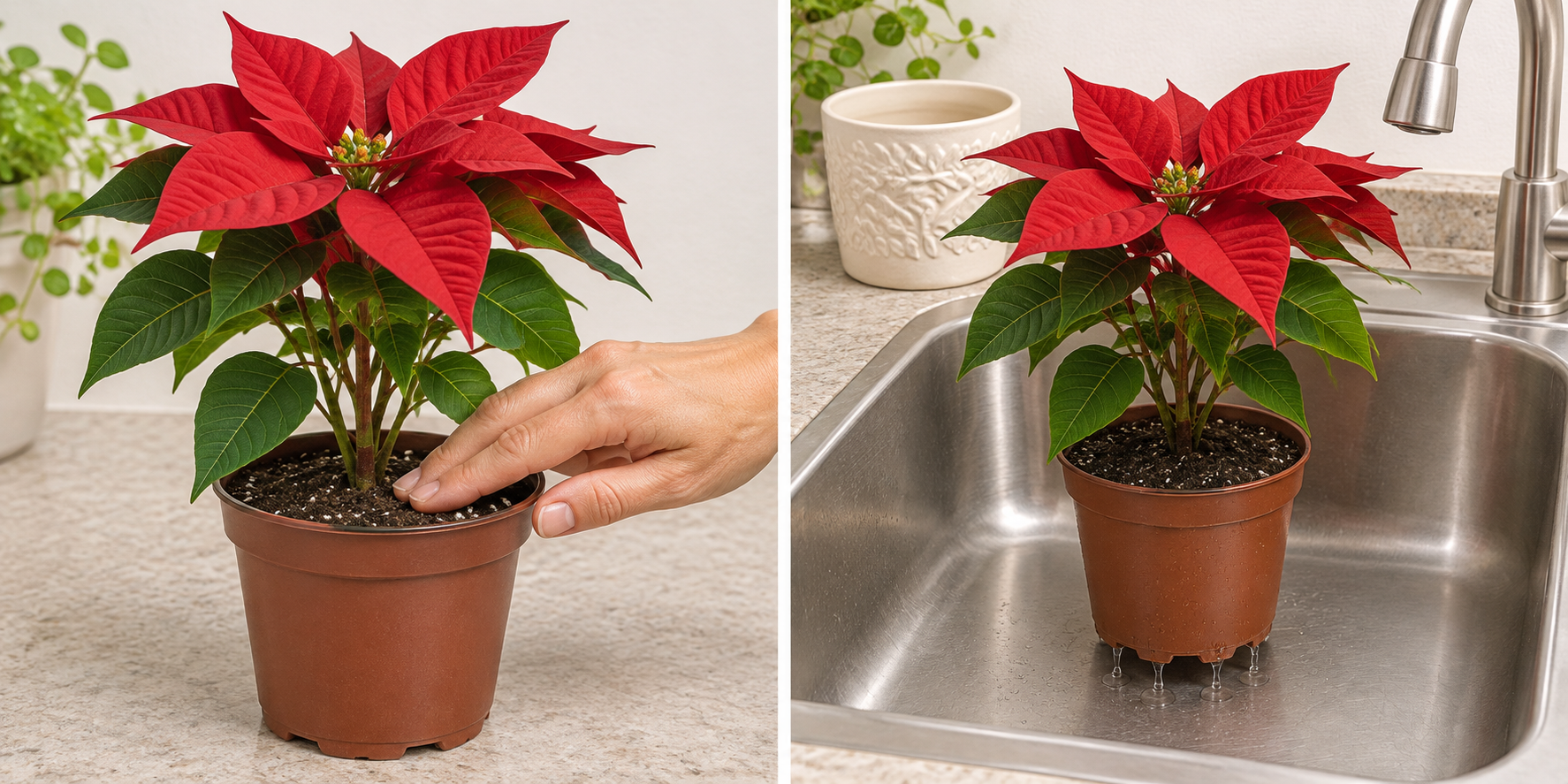
AI-generated illustration: check the soil first, then let a watered pot drain outside its decorative cover.
-
Let the pot finish draining. Leave it at the sink until it no longer sheds a stream of water when lifted. Empty and dry the saucer or outer pot before putting the plant back. Check again for collected water afterward and empty it. The aim is moist compost with air available to the roots, not a reservoir under the pot.
-
Choose a steady indoor position. Put the plant in a bright spot with indirect light, away from draughty doors, hot air vents and heaters. Keep leaves clear of cold glass. University of Minnesota Extension recommends about 65–70°F (18–21°C) indoors. Choose a stable surface where children and pets cannot reach the plant.
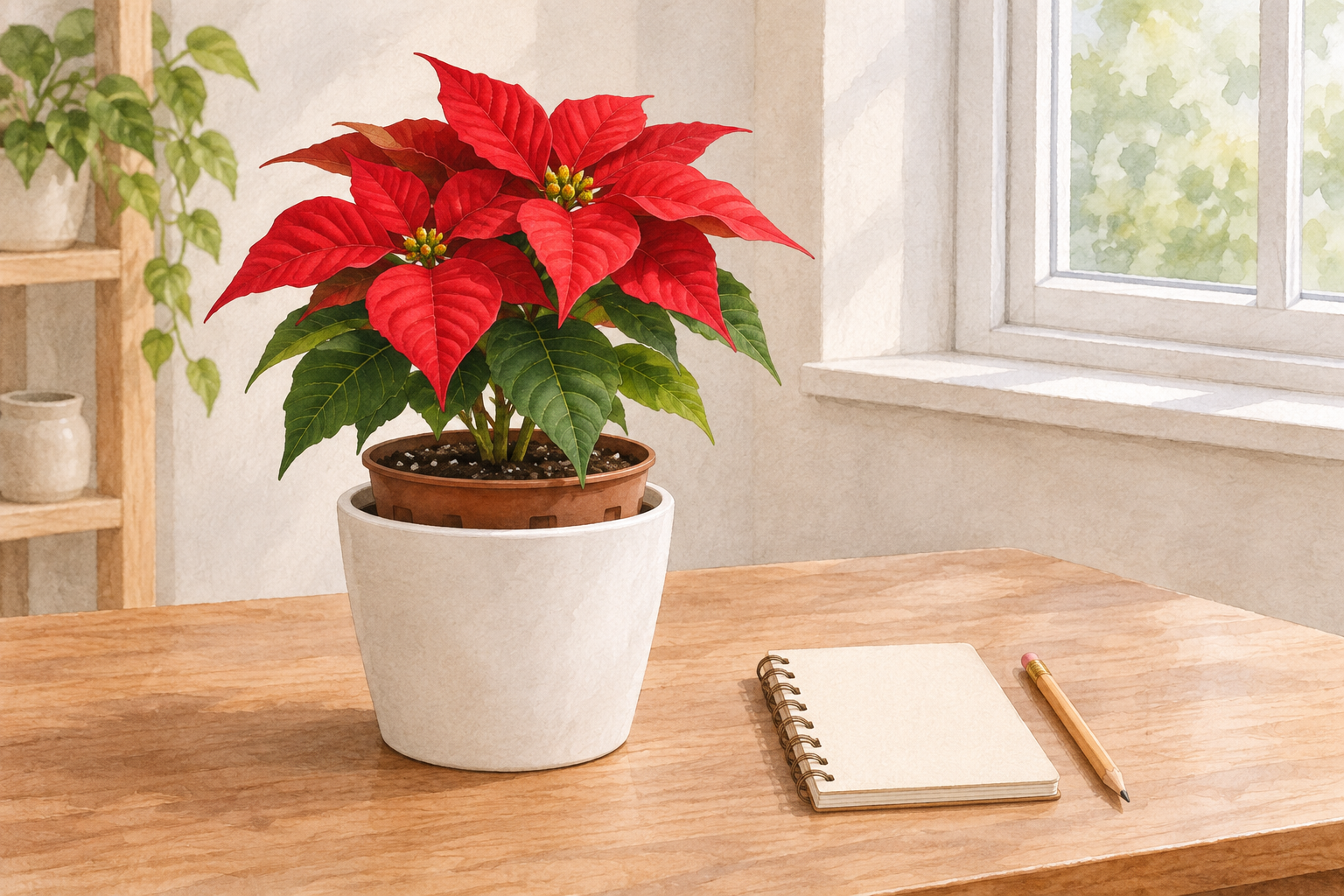
AI-generated illustration: a bright indoor position with room between the leaves and window glass.
-
Recheck the soil, not the calendar. Make a quick moisture check part of your routine, watering only when the surface starts to feel dry. If the plant wilts while the compost is wet, do not automatically add more water; inspect drainage and ask a nursery for help if it persists. You do not need fertilizer during the holiday display period.
Common question: should I repot it immediately? Usually not for a short seasonal display if it is healthy and drains properly. This tutorial covers routine watering, not rescuing a waterlogged root system or getting the plant to colour again next year.