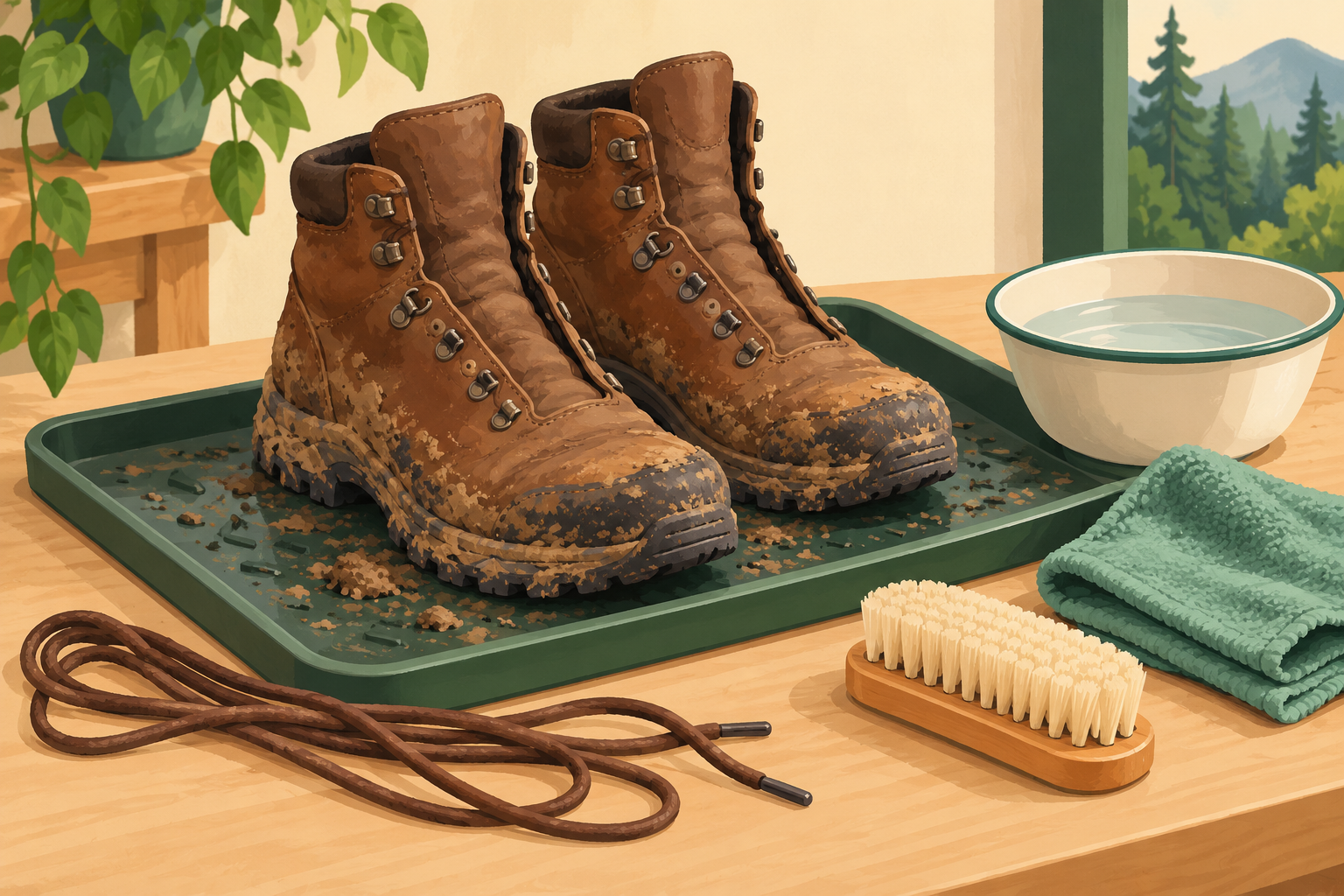
To clean ordinary mud from hiking boots, remove the laces and removable insoles, brush away loose grit, then clean the exterior with lukewarm water and a soft brush. Use a cleaner only if your boot manufacturer approves it for the material. Let everything air-dry away from direct heat before reassembling.
A muddy walk should not end with a ruined pair of boots. This guide keeps the job simple: clear the tread, lift dirt gently and give the boots time to dry. It covers routine exterior cleaning, not stain removal, mold, chemical contamination or repairing damaged footwear.
Time: about 20 minutes of active work (editorial estimate), plus variable air-drying time. Start with the care instructions for your exact boots. Suede, nubuck, sheepskin, decorative finishes and waterproof membranes can need different treatment. Do not treat all leather alike.
Hero image: AI-generated generic illustration, not a photograph of an actual product or a tested cleaning session.
What you need
- Your boots and the manufacturer’s model-specific care instructions
- Soft nylon brush or old soft toothbrush, plus a clean cloth
- Lukewarm water and a washable tray or protected work surface
- Optional: a cleaner explicitly approved for your boot model/material; a ventilated place for air drying
Steps
-
Check the material and condition
Find the care directions for your exact model before adding water or cleaner. Look for splitting soles, damaged seams or peeling material; cleaning will not repair them. This routine is for ordinary outdoor mud. If the boots have suede, nubuck, sheepskin or a special finish, use the maker’s specific method instead of assuming smooth-leather care applies.
-
Remove laces and removable insoles
Set the boots on a washable tray or protected surface. Take out the laces and any insoles designed to be removed, then shake out loose grit. Do not pull out a bonded footbed. Keep the parts separate so you can reach under the tongue and let the inside ventilate later.
-
Brush away loose dirt and clear the tread
Use a soft brush to lift loose dirt from the uppers and around seams. Brush the outsole grooves, removing trapped pebbles gently without cutting or gouging the rubber. If mud is stubborn, soften it with a little water rather than scraping the upper with a sharp tool.
-
Clean the exterior gently
Work with lukewarm water, a soft brush and a clean cloth. Avoid immersing the boots. If water is not enough, use only a cleaner approved for the boot’s material and follow its directions; rinse away residue as instructed. Do not improvise with bleach, vinegar, dish detergent, saddle soap or oils. A waterproof lining does not make every outer material safe for the same cleaner.
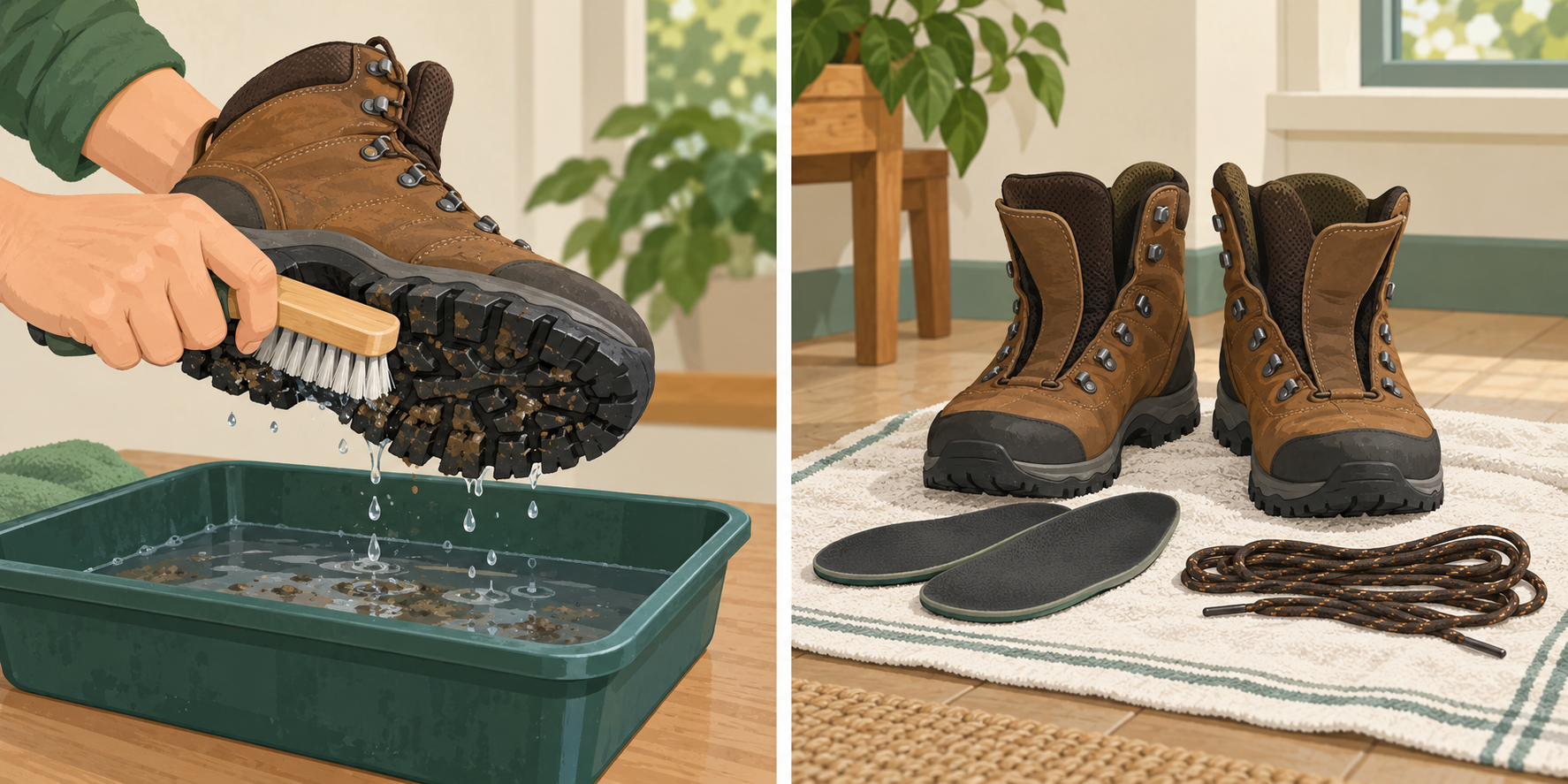
AI-generated generic illustration: gentle tread cleaning and separate air drying. Not a product photograph or a tested cleaning session.
-
Air-dry the boots and parts separately
Open the tongues and let the boots dry in a ventilated, shaded place at normal room temperature. Keep insoles out until both boots and insoles are dry. A room fan can improve airflow. Do not use a radiator, oven, hot car, hair dryer or direct sunlight to hurry the process. Drying time depends on how wet the boots became.
-
Reassemble and check before storing
When everything is dry, replace the insoles and laces. Check the tread, seams and sole attachment again. Store dry boots in a ventilated place, not sealed away while damp. If water no longer beads on the upper, consult the maker about compatible water-repellent treatment. Cleaning, conditioning and waterproofing are different jobs; do not apply a universal wax or grease.
Troubleshooting and FAQs
There is still a stain. Should I scrub harder?
No. Stop before damaging the finish. Check the manufacturer’s stain guidance or contact its care team; routine mud cleaning may not remove a permanent mark.
Can I put hiking boots in the washing machine?
Not for this method. The guidance used here recommends hand cleaning; follow your model’s explicit instructions rather than treating boots like washable sneakers.
Do all leather boots need conditioner afterward?
No. REI distinguishes full-grain leather from suede and nubuck, and manufacturers restrict products differently. Use only the treatment specified for your pair.
What if they still feel damp tomorrow?
Keep them open and ventilated. Do not add heat or store them damp just to finish on a schedule.
Related guide
For another piece of wet-weather kit, see how to wash a rain jacket using its care instructions.
Sources and research note
This is a research-based guide, not a report of hands-on testing. Care guidance: REI: cleaning hiking boots, LOWA US: boot care, and GORE-TEX: footwear care. Your footwear manufacturer’s instructions take priority.
Topic discovery, checked October 27, 2026: the Pinterest Trends US overview showed Boots outbound clicks up 52% month over month, with a historical chart covering August 28–October 23, 2026 and a rising latest segment. This is shopping-category click activity—not search growth for boot cleaning, sales, or proof of overall demand. No forecast values were used.