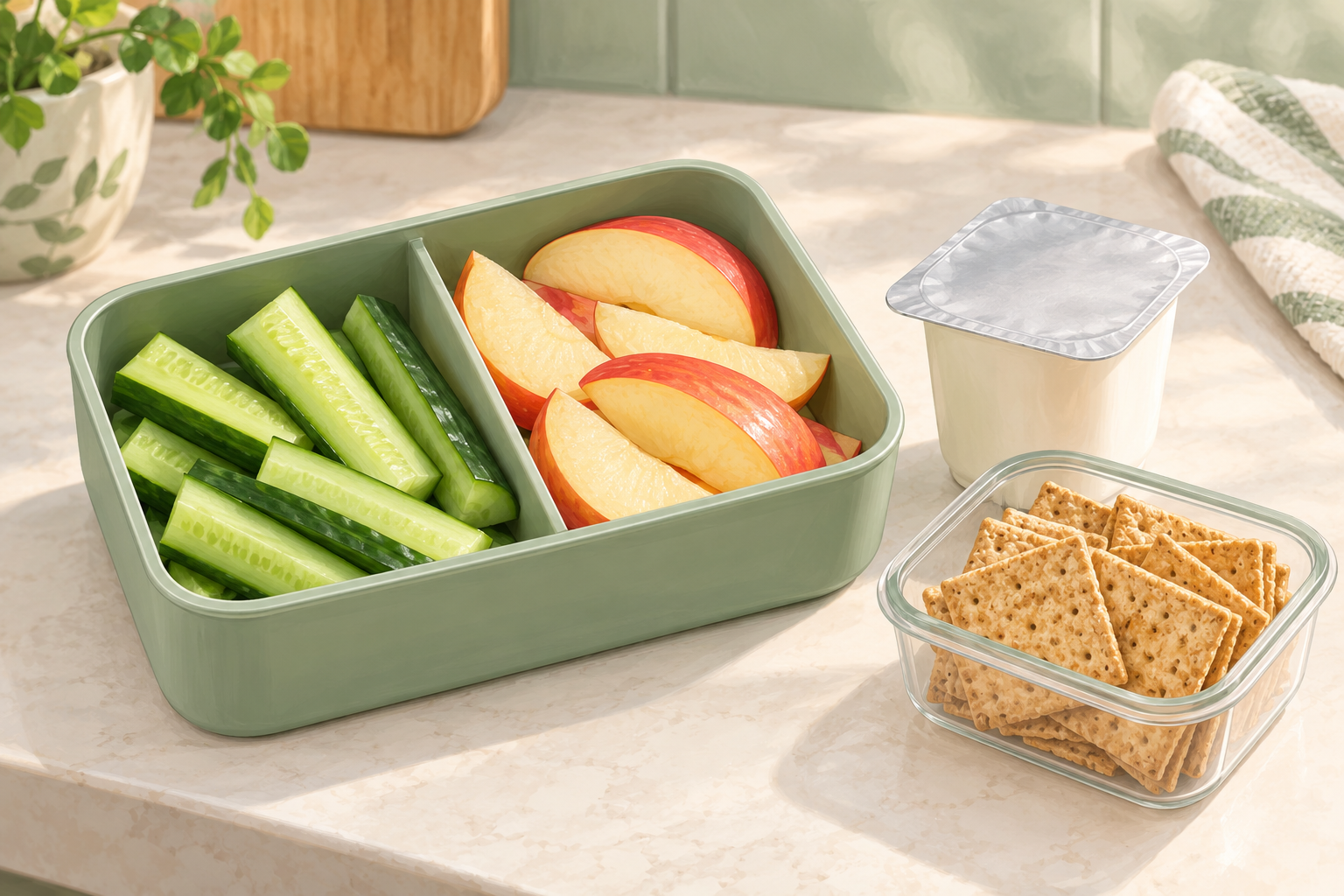
Pack an afternoon snack box by pairing ready-to-eat fruit or vegetables with a food you enjoy, such as yogurt, and a separately packed crunchy side. Start with cold ingredients, keep wet and dry foods apart, and refrigerate the finished box until you need it. If you take perishable food out, use an insulated bag with two cold sources.
This beginner method makes one snack box in about 10 minutes of active preparation. It does not include freezing ice packs or chilling ingredients. You can use ordinary clean food containers; a compartment-style box is optional.
AI-generated illustrations show a generic packing example, not a tested product or an actual food-safety test.
A simple combination to start with
Try a few cucumber sticks, apple slices, one small unopened yogurt and a handful of crackers in their own dry container. Adjust the amount to your appetite. This is a packing idea, not a nutrition prescription or a complete meal plan. Choose foods that suit your dietary needs and check ingredient labels for allergens.
Prefer a different combination? Swap the apple for a whole easy-peel orange, the cucumber for another ready-to-eat vegetable, or the yogurt for another food you already use. Follow its label for storage. Avoid adding a new ingredient just to make the box look like a photograph.
What you need
- Clean food container with a lid (compartments optional)
- Small dry container or reusable bag for crackers, plus a spoon
- Apple, cucumber, small unopened yogurt and crackers, in amounts you will eat
- Clean knife, cutting board, produce brush and towel
- Refrigerator at 40°F (4°C) or below; insulated bag and two frozen cold sources if taking perishables out
Steps
-
Choose one small, realistic snack
Set out your clean containers and decide what you will actually want to eat this afternoon. For this example, use cucumber, apple, an unopened yogurt and crackers. Check the yogurt label and keep it refrigerated while you prepare the produce. There is no need to fill every compartment.
For a snack that will not have refrigeration or adequate cold sources, choose suitable shelf-stable foods instead, such as a whole uncut apple and packaged crackers. Do not treat a sealed yogurt as shelf-stable unless its label explicitly says so.
-
Clean the preparation area and rinse the produce
Wash your hands with soap and water for at least 20 seconds. Use a clean knife, board and containers, keeping this ready-to-eat food away from raw meat and its utensils.
Rinse the apple and cucumber under running water before cutting. Scrub the cucumber with a clean produce brush, then dry both with a clean towel. Do not use soap or bleach on food. Remove damaged areas. The FDA produce-cleaning guide explains these precautions.
-
Cut and pack, keeping the crackers dry
On a stable board, cut the cucumber into manageable sticks and remove the apple core before slicing. Pack the produce in one section or small container. Keep the yogurt in its sealed cup and pack the crackers separately so they do not sit against damp produce.
Close each lid securely. Add a spoon if needed. Ordinary containers work well here; the goal is food you will enjoy and a lid that fits, not a perfectly styled arrangement. This example is intended for adults and older children; younger children need age-appropriate food shapes and supervision.
-
Refrigerate the packed food until you need it
Put the closed produce container and yogurt back in a refrigerator at 40°F (4°C) or below. Use an appliance thermometer rather than guessing from the dial. Keep the crackers dry and separate until you pack the bag or sit down to eat.
For this first attempt, prepare a same-day snack or assemble it the evening before for the following afternoon. This is a convenience plan, not a promise of shelf life: ingredient condition, label instructions and safe temperatures still matter. Do not use this method to justify keeping a mixed box all week.
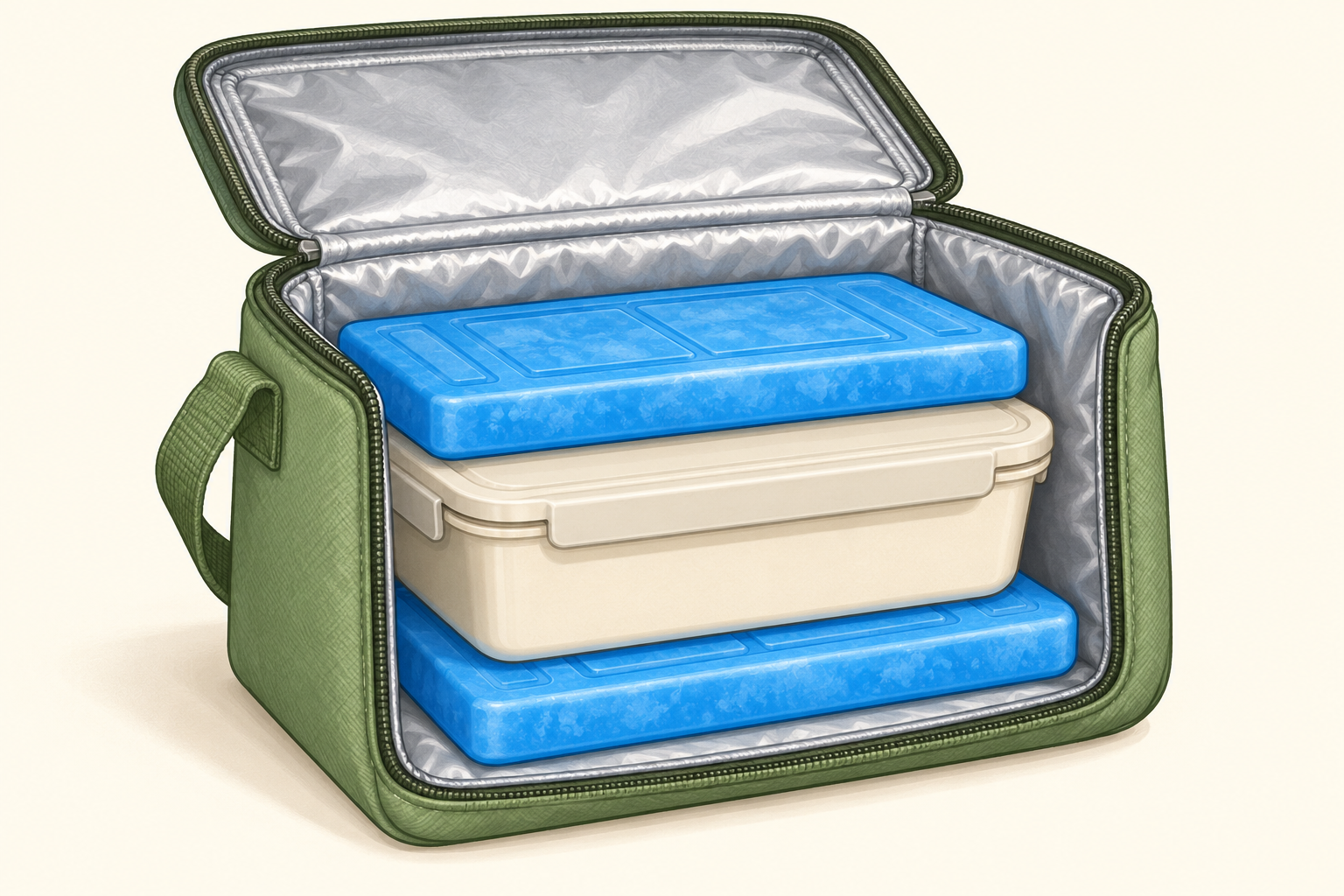
AI-generated cutaway illustration showing two cold sources around a closed food container. -
Use two cold sources when taking the box out
Pack the chilled food just before leaving. Put it in an insulated bag with at least two frozen cold sources, one above and one below the perishable food. USDA recommends gel packs at least 5 by 3 inches, or a frozen gel pack paired with a frozen water bottle. Make sure everything fits without preventing the bag from closing.
Refrigerate on arrival when possible. Do not assume any ice pack guarantees a whole day of safe cooling: bag size, heat and opening the bag affect performance. Keep food at 40°F (4°C) or below and use a thermometer when checking temperature. See USDA guidance for packed food.
Optional supply: Use suitable cold packs you already own. If you need some, the XL version below is a larger-format option; check that it fits your bag.
As an Amazon Associate I earn from qualifying purchases.
Fit + Fresh Cool Coolers XL Slim Ice Packs, Multi four-pack. Exact variant and ASIN B08QDWMMW5 checked October 22, 2026. This is an optional supply, not a tested recommendation or a guaranteed cooling time.
-
Enjoy the snack, then clean the containers
Take the food out when you are ready to eat. Discard perishable food left without safe chilling for more than two hours, or one hour when temperatures are above 90°F (32°C). If you do not know whether it stayed safely cold, discard it rather than tasting it to decide. Wash reusable containers and utensils after use.
Troubleshooting
- Soggy crackers: put them in a separate dry, closed container instead of an open divider next to produce.
- Too much to finish: pack a smaller amount next time. A snack box does not need to be full.
- No room for the cold sources: use a larger insulated bag or choose shelf-stable foods. Do not remove cooling just to fit more food.
- Apple slices look less appealing: pack a whole apple instead and wash it before eating. You do not need a special treatment for this tutorial.
Frequently asked questions
Do I need to buy a bento box?
No. A clean, food-safe container with a secure lid plus a small dry container is enough. Use what you already have before buying anything.
Can I prepare it the night before?
Yes, keep perishable ingredients refrigerated and pack the insulated bag just before leaving. Keep dry crackers separate. Follow storage instructions on individual ingredients.
Can I leave it on my desk all morning?
Not if it contains perishables without adequate cooling. Refrigerate it or use the cold-packing method above. A closed lid alone does not keep food safe.
Why this topic, and what the evidence means
Checked October 22, 2026: Pinterest Trends, United States, displayed “Afternoon Snacks” with Pin saves up 4,000% versus last month. The page did not state exact start and end dates for that monthly comparison. Its displayed overview chart covered July 27–October 19 and showed a recent pullback followed by a rebound, not uninterrupted growth. This is Pinterest saving activity, not Google search growth or proof that this exact snack-box method is trending. It is a topic-selection signal, not evidence for health or food-safety claims.
Sources and another beginner food project
- FoodSafety.gov: clean, separate, cook and chill
- FDA: preparing fresh produce safely
- USDA: keeping packed food cold
For a different hands-on food project, try our beginner cucumber-and-avocado sushi rolls. Follow that tutorial’s separate rice-handling instructions; it is not a substitute for this snack-box method.